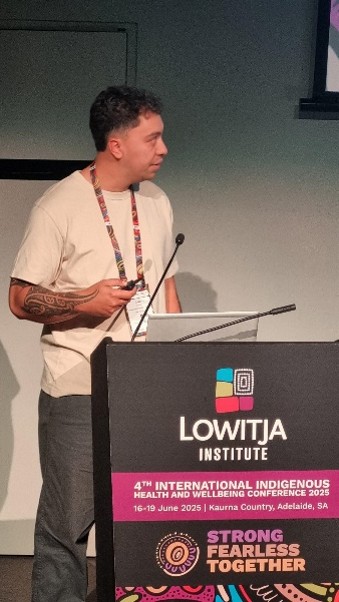
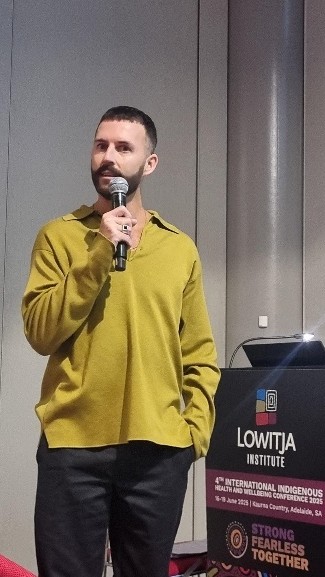
"Stand Strong, Be Fearless and Work Together for the Health and Wellbeing of Indigenous People" was the theme of the Lowitja Institute 4th International Indigenous Health and Wellbeing Conference, held on Kaurna Country in Adelaide from 16–19 June. Hosted at the Adelaide Convention Centre, the event attracted over 1,300 participants and featured 230 presentations. The conference was officially opened with a powerful smoking ceremony led by Uncle Moogy Sumner (Ngarrindjeri, Kaurna). Whakauae researchers - Dr Amohia Boulton, Gill Potaka-Osborne, Luke Enoka, and Ben Barton - were proud to attend the conference and present their respective research projects. The following sections provide a summary of each presentation, along with personal reflections from each presenter on what attending the conference meant to them.
Luke’s presentation provided a comprehensive overview of the project’s background and timeline, with particular emphasis on the cultural and historical significance of the manu huia to Ngāti Hauiti, and the collaborative co-design process developed in partnership with the Rūnanga. This co-design approach centred on the reclamation of kōrero tuku iho relating to the manu huia and broader Ngāti Hauiti tikanga.
Citation: Enoka. L. (2025). Te Remu Huia: The tail feathers of the Huia Bird. Co-designing an indigenous model of leadership, governance and decision making. Lowitja Institute 4th International Indigenous Health and Wellbeing Conference. Adelaide, Australia.
Luke expressed how honoured he felt to attend the conference, noting that the theme Strong, Fearless, Together deeply resonated with him, particularly considering the current political climate in Aotearoa. He reflected on how, despite our diverse stories, histories, backgrounds, and strategies, as Indigenous researchers we are united by shared aspirations including the pursuit of Indigenous self-determination and the advancement of Indigenous health equity.
A highlight for him was a powerful keynote presented by Joshua Creamer (Waanyi, Kalkadoon) on his legal advocacy work for truth-telling and human rights. The presentation expanded his understanding of the historical and contemporary injustices across different states of so-called Australia. His work exemplified the many pathways to advancing Indigenous and human rights. Luke said “the conference featured a wide range of concurrent sessions covering diverse kaupapa, projects, and topics, making it a challenge to choose which ones to attend. Each day, I arrived with my highlighted timetable in hand, ready to listen to and support fellow Māori researchers, as well as our Indigenous whanaunga from around the world. I was particularly drawn to sessions focused on self-determination and climate issues”. He went on to say it was encouraging to see that Indigenous communities around the world share common values around the deep interconnections between tangata, whenua, and hauora and appreciated that the conference recognised and honoured this by adopting Country and Climate as a key subtheme.
Gill's presentation highlighted the positive impact of using the Kaupapa Māori Appreciative Inquiry methodology, emphasising how it significantly influenced and enhanced the research outcomes – particularly by amplifying the voice of whānau. This was evidenced by the Te Korowai Aroha ki te Tangata Working Group, which was made up of whānau and Gonville Health staff working together to make changes within a local primary healthcare organisation.
Citation: Potaka-Osborne. G. (2025). Cancers threat to indigenous health and wellbeing: fear and resilience. Lowitja Institute 4th International Indigenous Health and Wellbeing Conference. Adelaide, Australia.
Gill said she enjoyed reconnecting with the Indigenous research community, particularly with Sharon Clarke (Wergaia, Gunditjmara), a respected long-time friend and colleague who had worked with Whakauae on previous research.
This presentation by Ben and Amohia highlighted the underrepresentation of Māori in HIV research and prevention strategies in Aotearoa New Zealand. This gap is a significant public health concern, as HIV rates are decreasing among non-Māori but increasing among Māori. The presenters emphasised that Māori are more likely to be diagnosed late with HIV; a situation that could be mitigated through greater awareness of, and access to, prevention tools such as Pre-exposure Prophylaxis (PrEP) medication.
Citation: Barton, B. & Boulton, A. (2025). Investigating Barriers and Enablers to Preventative HIV Access for Māori. Lowitja Institute 4th International Indigenous Health and Wellbeing Conference. Adelaide, Australia.
This was Ben’s first conference as an early-career Māori researcher. He shared that being in an unapologetically Indigenous space for four days straight—surrounded by other Indigenous researchers, activists, policy makers, and community leaders—did something for his wairua. There was a strong sense of safety, recognition, and shared purpose.
Reflecting on his time at the conference, Ben said: “Being immersed in Aboriginal culture—on Kaurna Country, in a place I had never been before, felt both grounding and expansive. There was a deep respect for whenua and people, and I found myself constantly reflecting on the similarities and differences between our contexts.”
He also noted the parallels in the political landscapes of Aotearoa and Australia, particularly in how they affect Aboriginal and Torres Strait Islander communities. While this stirred a range of emotions, Ben was struck by the unwavering commitment, creativity, and mana of the people he met. It reminded him that we are part of a much wider collective movement for Indigenous rights and wellbeing.
On the Wednesday evening, a gala dinner was held for all delegates. Whakauae staff described it as a space to replenish the wairua after the intensity of the previous days. It was also a valuable opportunity to deepen connections within the Whakauae team and with other researchers. There was something truly special about coming together as Whakauae whānau and alongside other Indigenous whanaunga to share kai, kōrero, and a few good laughs.
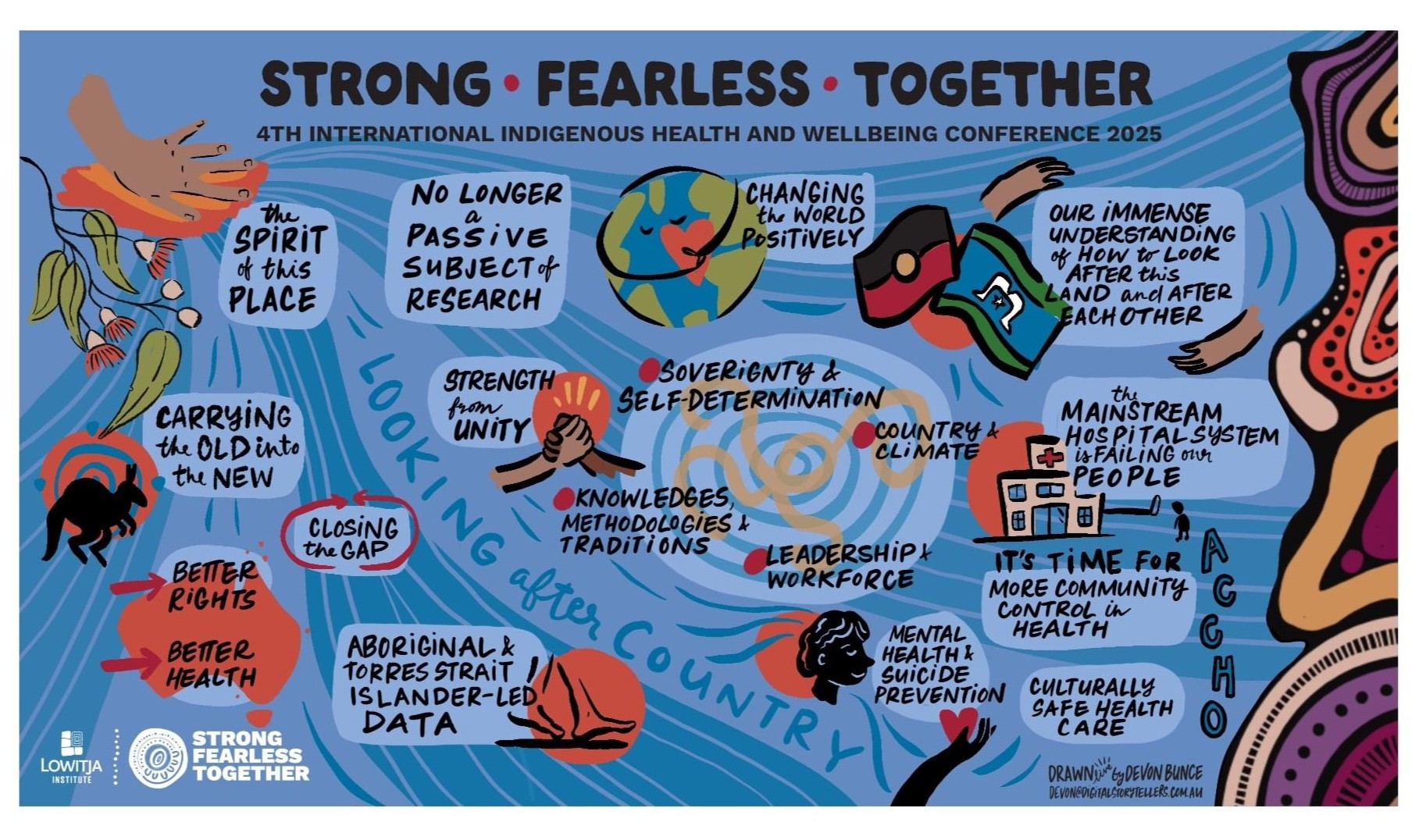
"Stand Strong, Be Fearless and Work Together for the Health and Wellbeing of Indigenous People" was the theme of the Lowitja Institute 4th International Indigenous Health and Wellbeing Conference, held on Kaurna Country in Adelaide from 16–19 June. Hosted at the Adelaide Convention Centre, the event attracted over 1,300 participants and featured 230 presentations. The conference was officially opened with a powerful smoking ceremony led by Uncle Moogy Sumner (Ngarrindjeri, Kaurna). Whakauae researchers - Dr Amohia Boulton, Gill Potaka-Osborne, Luke Enoka, and Ben Barton - were proud to attend the conference and present their respective research projects. The following sections provide a summary of each presentation, along with personal reflections from each presenter on what attending the conference meant to them.
Luke’s presentation provided a comprehensive overview of the project’s background and timeline, with particular emphasis on the cultural and historical significance of the manu huia to Ngāti Hauiti, and the collaborative co-design process developed in partnership with the Rūnanga. This co-design approach centred on the reclamation of kōrero tuku iho relating to the manu huia and broader Ngāti Hauiti tikanga.
Citation: Enoka. L. (2025). Te Remu Huia: The tail feathers of the Huia Bird. Co-designing an indigenous model of leadership, governance and decision making. Lowitja Institute 4th International Indigenous Health and Wellbeing Conference. Adelaide, Australia.
Luke expressed how honoured he felt to attend the conference, noting that the theme Strong, Fearless, Together deeply resonated with him, particularly considering the current political climate in Aotearoa. He reflected on how, despite our diverse stories, histories, backgrounds, and strategies, as Indigenous researchers we are united by shared aspirations including the pursuit of Indigenous self-determination and the advancement of Indigenous health equity.
A highlight for him was a powerful keynote presented by Joshua Creamer (Waanyi, Kalkadoon) on his legal advocacy work for truth-telling and human rights. The presentation expanded his understanding of the historical and contemporary injustices across different states of so-called Australia. His work exemplified the many pathways to advancing Indigenous and human rights. Luke said “the conference featured a wide range of concurrent sessions covering diverse kaupapa, projects, and topics, making it a challenge to choose which ones to attend. Each day, I arrived with my highlighted timetable in hand, ready to listen to and support fellow Māori researchers, as well as our Indigenous whanaunga from around the world. I was particularly drawn to sessions focused on self-determination and climate issues”. He went on to say it was encouraging to see that Indigenous communities around the world share common values around the deep interconnections between tangata, whenua, and hauora and appreciated that the conference recognised and honoured this by adopting Country and Climate as a key subtheme.
Gill's presentation highlighted the positive impact of using the Kaupapa Māori Appreciative Inquiry methodology, emphasising how it significantly influenced and enhanced the research outcomes – particularly by amplifying the voice of whānau. This was evidenced by the Te Korowai Aroha ki te Tangata Working Group, which was made up of whānau and Gonville Health staff working together to make changes within a local primary healthcare organisation.
Citation: Potaka-Osborne. G. (2025). Cancers threat to indigenous health and wellbeing: fear and resilience. Lowitja Institute 4th International Indigenous Health and Wellbeing Conference. Adelaide, Australia.
Gill said she enjoyed reconnecting with the Indigenous research community, particularly with Sharon Clarke (Wergaia, Gunditjmara), a respected long-time friend and colleague who had worked with Whakauae on previous research.
This presentation by Ben and Amohia highlighted the underrepresentation of Māori in HIV research and prevention strategies in Aotearoa New Zealand. This gap is a significant public health concern, as HIV rates are decreasing among non-Māori but increasing among Māori. The presenters emphasised that Māori are more likely to be diagnosed late with HIV; a situation that could be mitigated through greater awareness of, and access to, prevention tools such as Pre-exposure Prophylaxis (PrEP) medication.
Citation: Barton, B. & Boulton, A. (2025). Investigating Barriers and Enablers to Preventative HIV Access for Māori. Lowitja Institute 4th International Indigenous Health and Wellbeing Conference. Adelaide, Australia.
This was Ben’s first conference as an early-career Māori researcher. He shared that being in an unapologetically Indigenous space for four days straight—surrounded by other Indigenous researchers, activists, policy makers, and community leaders—did something for his wairua. There was a strong sense of safety, recognition, and shared purpose.
Reflecting on his time at the conference, Ben said: “Being immersed in Aboriginal culture—on Kaurna Country, in a place I had never been before, felt both grounding and expansive. There was a deep respect for whenua and people, and I found myself constantly reflecting on the similarities and differences between our contexts.”
He also noted the parallels in the political landscapes of Aotearoa and Australia, particularly in how they affect Aboriginal and Torres Strait Islander communities. While this stirred a range of emotions, Ben was struck by the unwavering commitment, creativity, and mana of the people he met. It reminded him that we are part of a much wider collective movement for Indigenous rights and wellbeing.
On the Wednesday evening, a gala dinner was held for all delegates. Whakauae staff described it as a space to replenish the wairua after the intensity of the previous days. It was also a valuable opportunity to deepen connections within the Whakauae team and with other researchers. There was something truly special about coming together as Whakauae whānau and alongside other Indigenous whanaunga to share kai, kōrero, and a few good laughs.