At Whakauae, we developed Te Ruru as aKaupapa Māori systems change framework to help us better understand and respondto the complex systems shaping Māori health and wellbeing. Systems thinkingrecognises that social, environmental, political, cultural, and economic issuesare deeply interconnected. Indigenous worldviews have long understood thisinterconnectedness through relationships between people, whenua, wai,ancestors, and the wider living world.
Te Ruru brings together systems changethinking with the values, histories, and aspirations that guide our KaupapaMāori research practice. It was developed to help make visible both the seenand unseen forces shaping Māori experiences, including the ongoing impacts ofcolonisation, disconnection, and inequity, while also recognising thestrengths, knowledge, creativity, and leadership already present within ourcommunities.
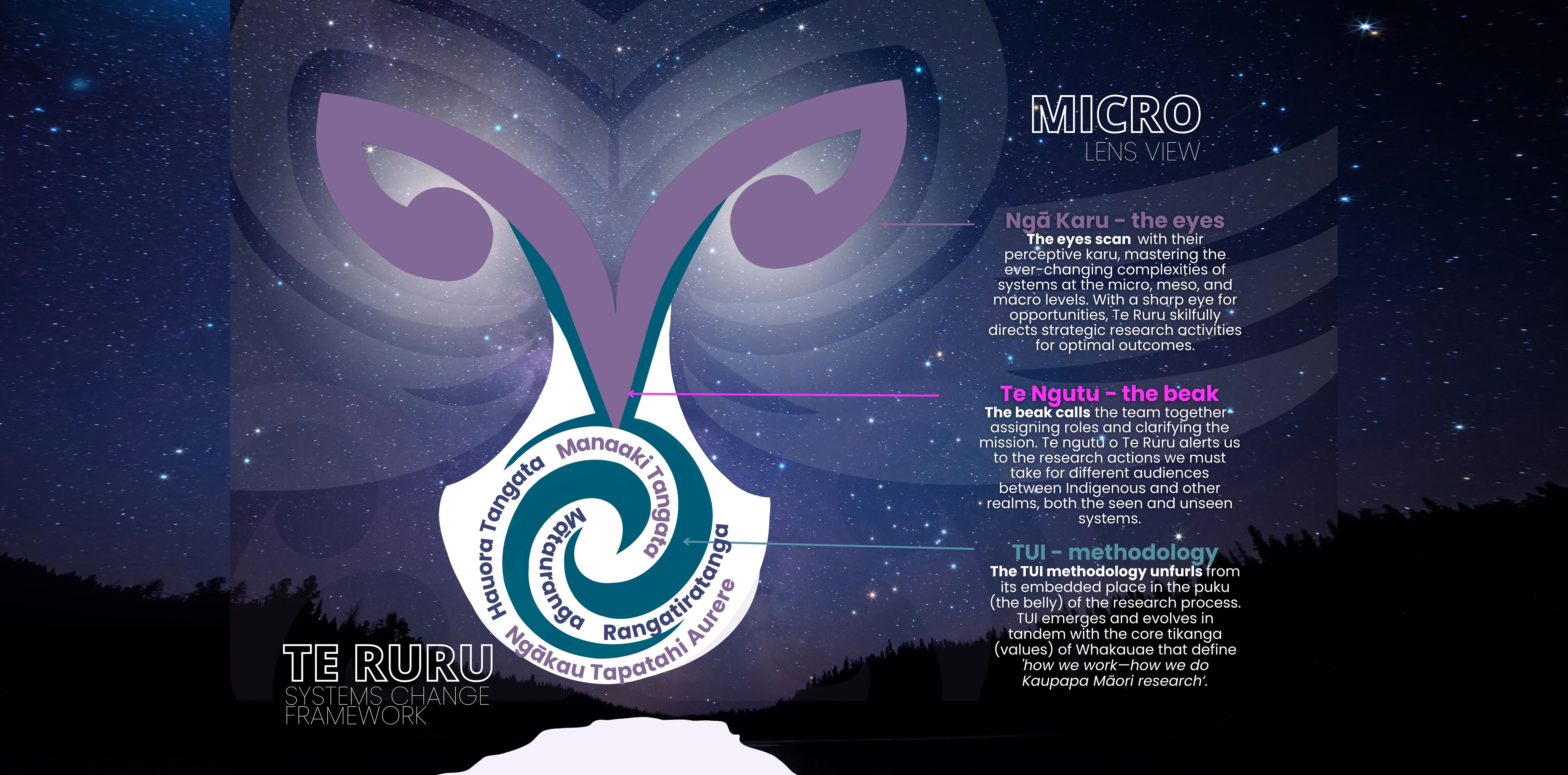
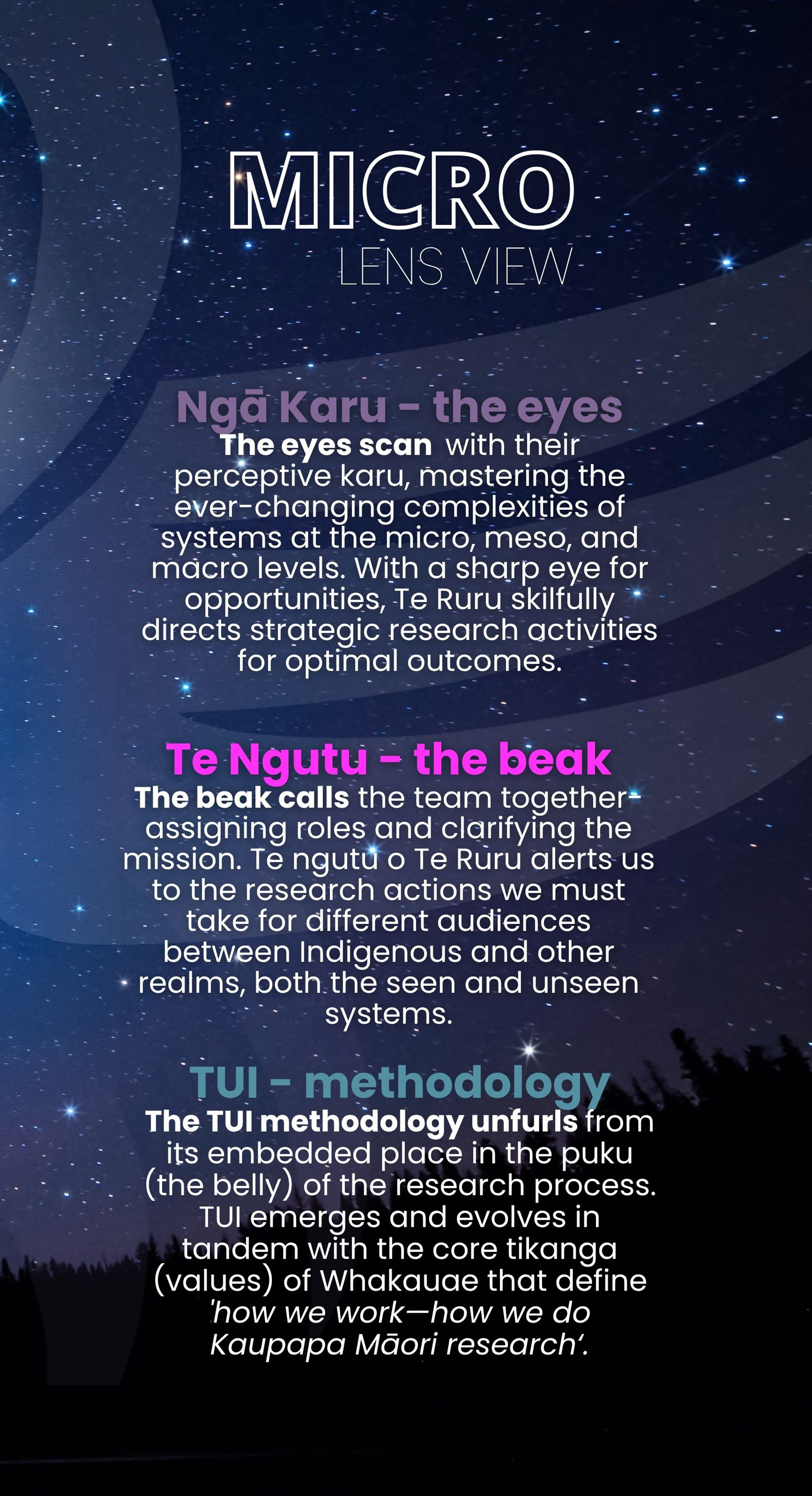
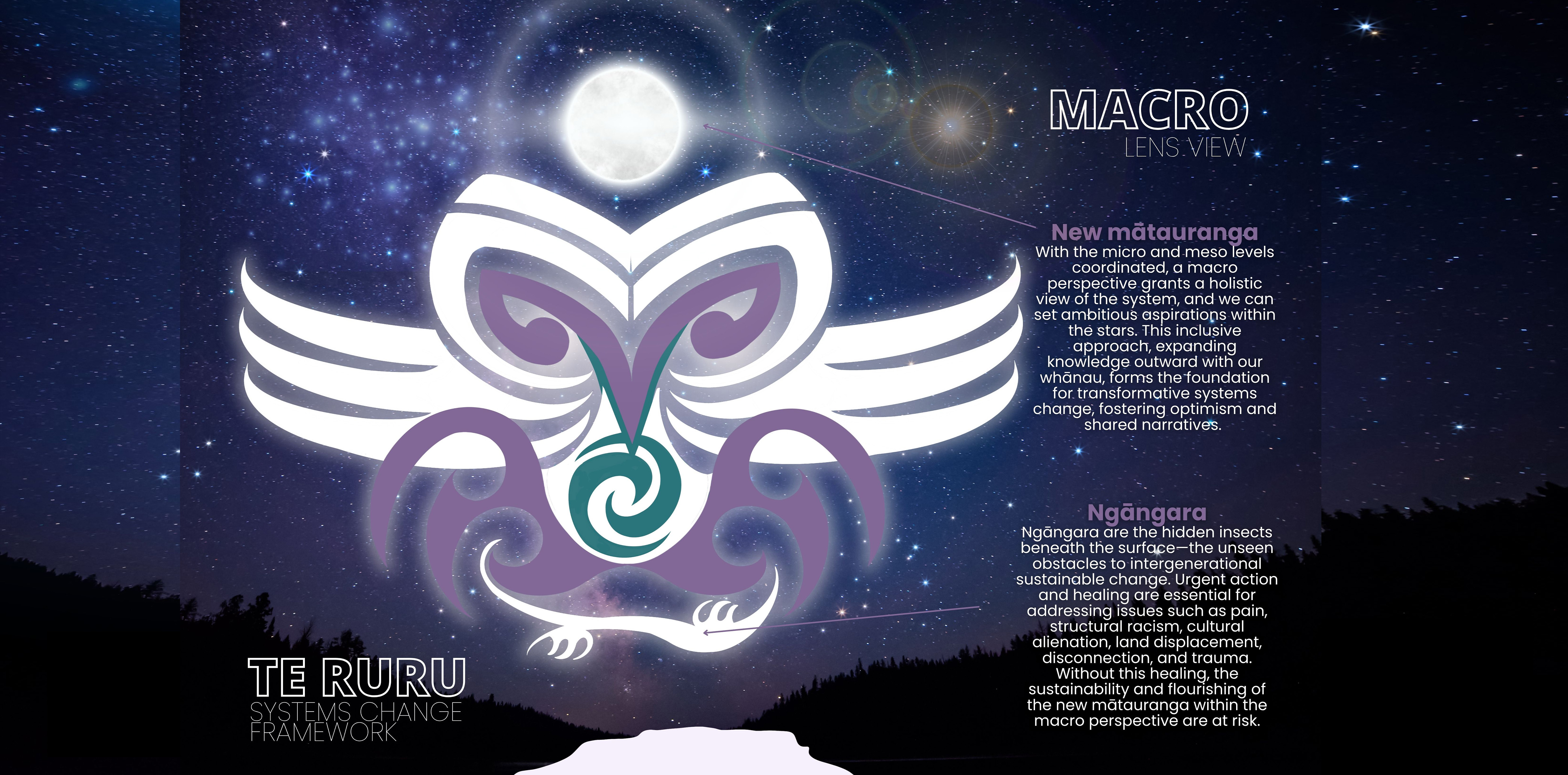
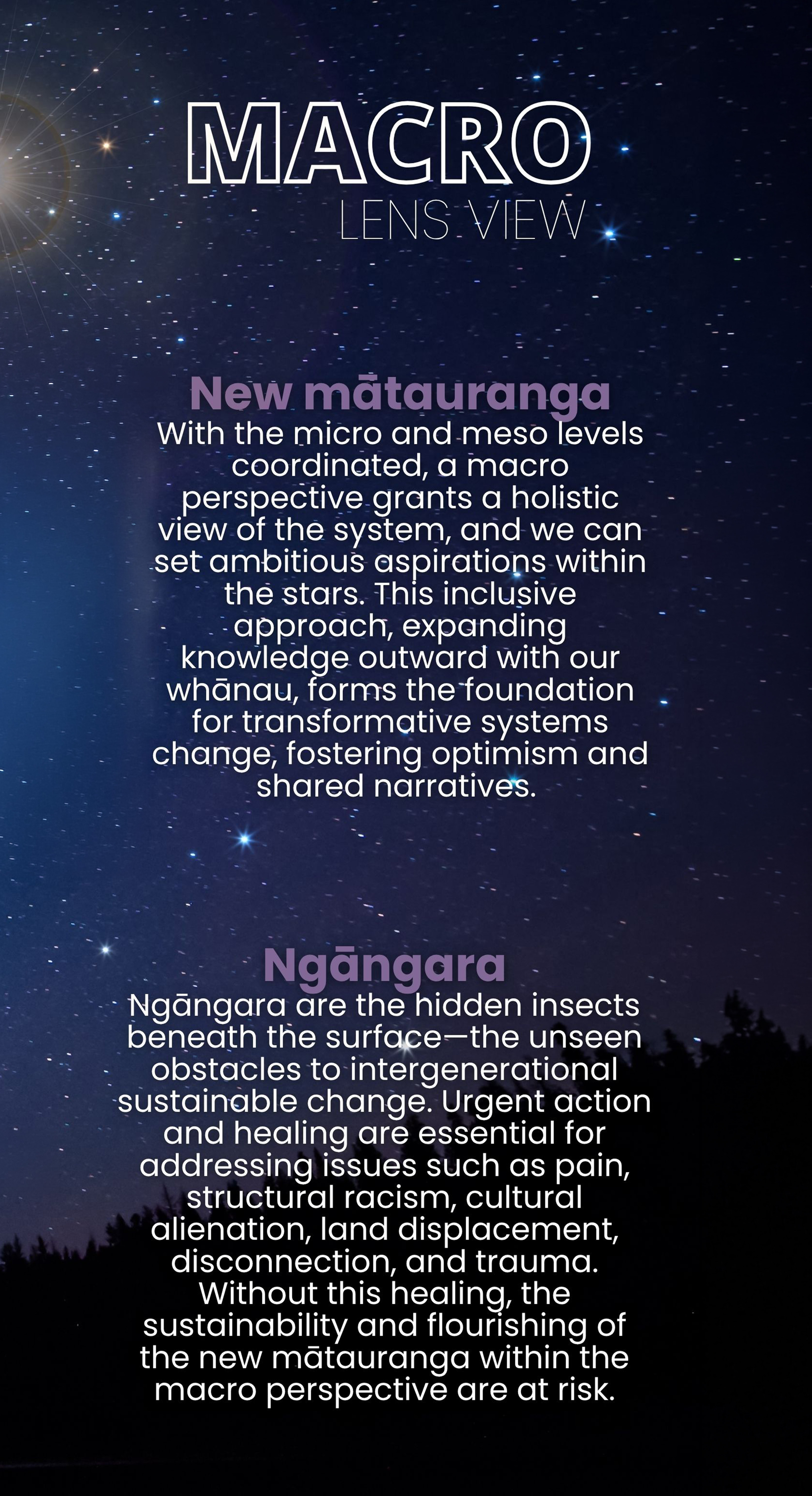
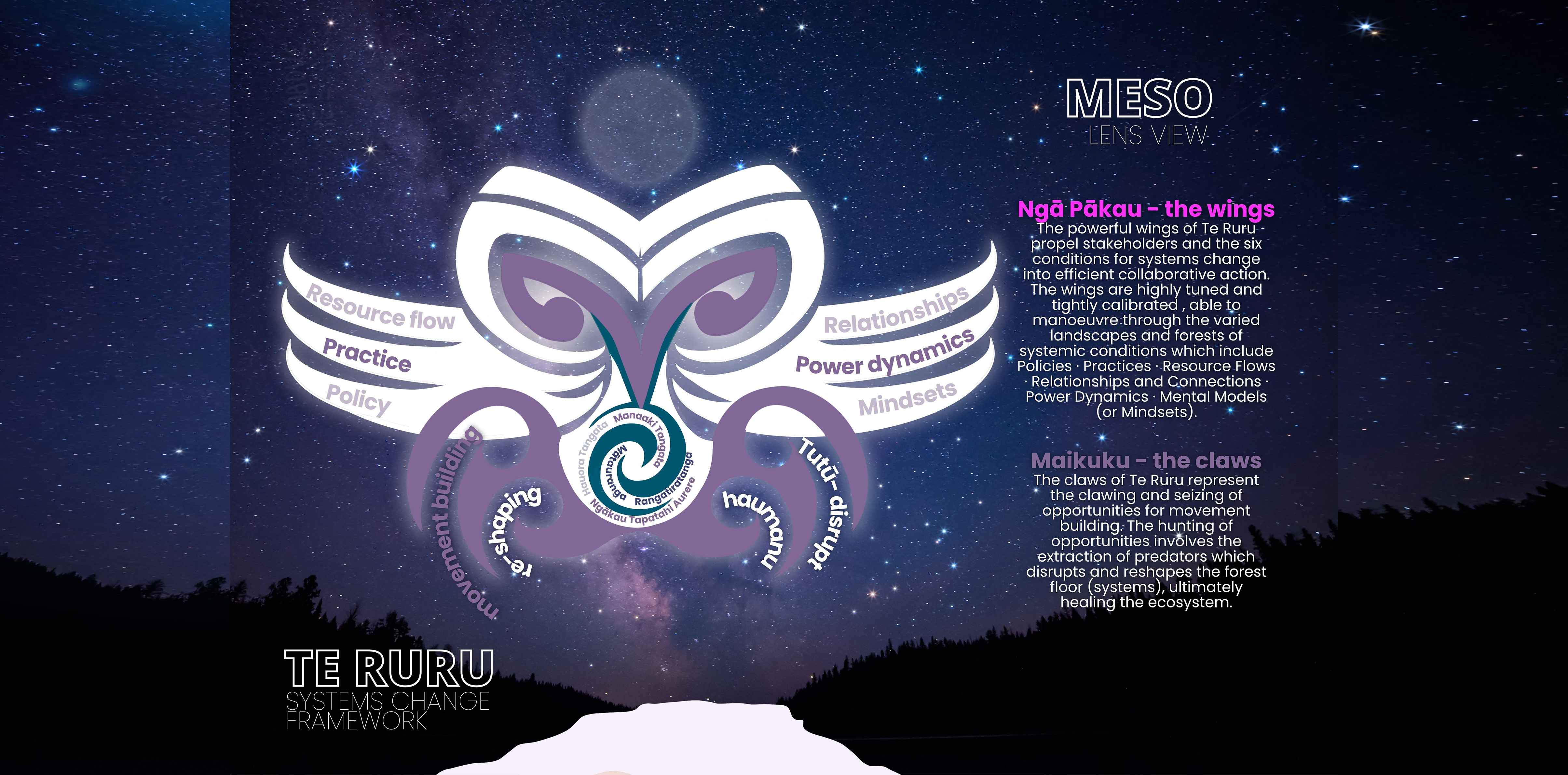
Te Ruru works across three interconnectedlenses: micro, meso, and macro. The micro lens focuses on people, values,relationships, healing, and identity. The meso lens looks at organisations,collaborations, practices, and how change happens collectively. The macro lensconsiders the wider systems, structures, environments, and conditions thatshape long-term transformation.
Rather than being a fixed or linearframework, Te Ruru is adaptive and fluid. The three lenses are designed to movebetween one another depending on what is needed in the moment. At times thework may begin at the macro level, addressing policy or structural conditions.At other times, transformation may begin at the micro level through healing,relationships, or shifts in thinking. The layers operate together, oftensimultaneously, allowing researchers and communities to move across differentparts of the system as new insights, opportunities, and challenges emerge.
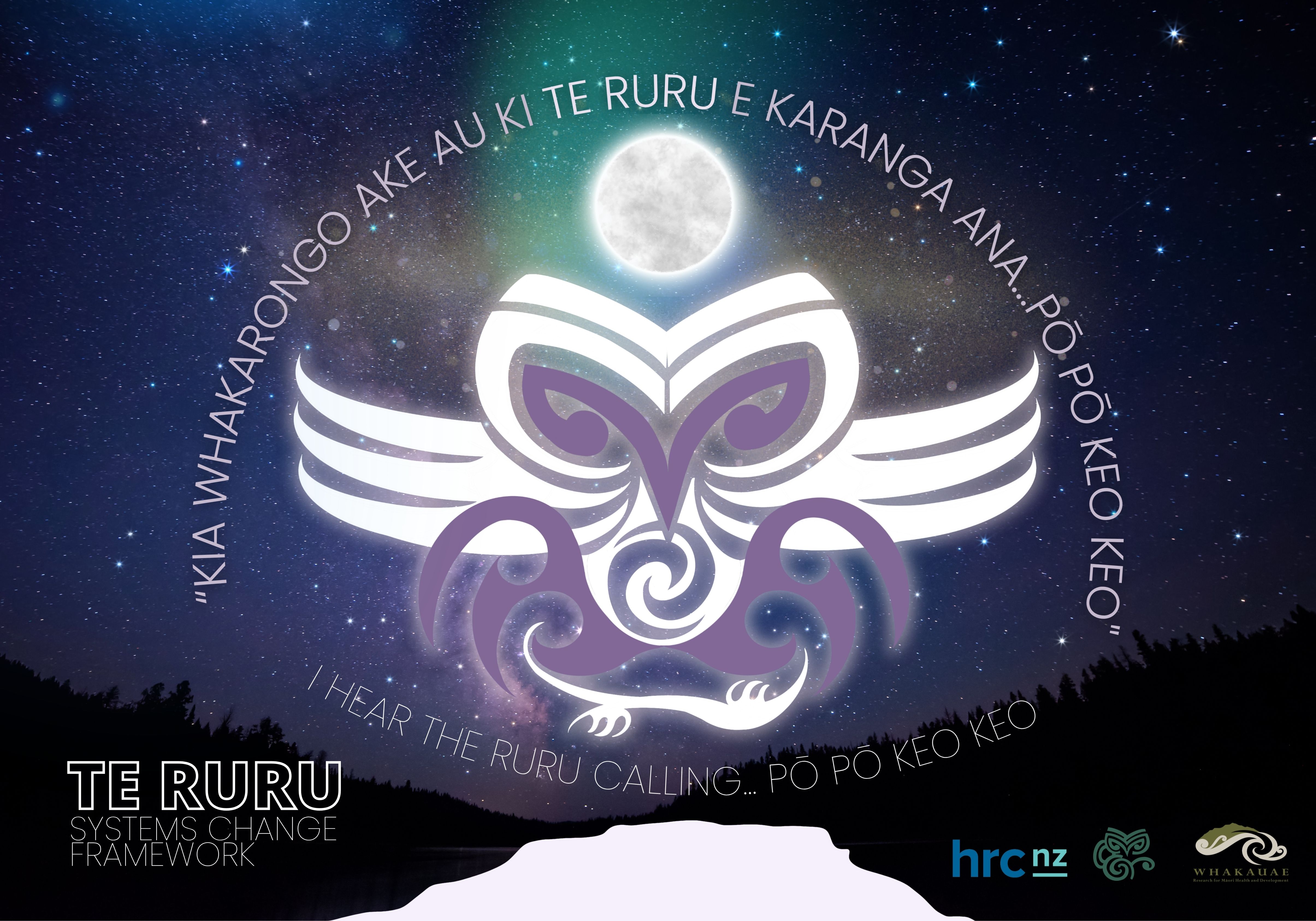
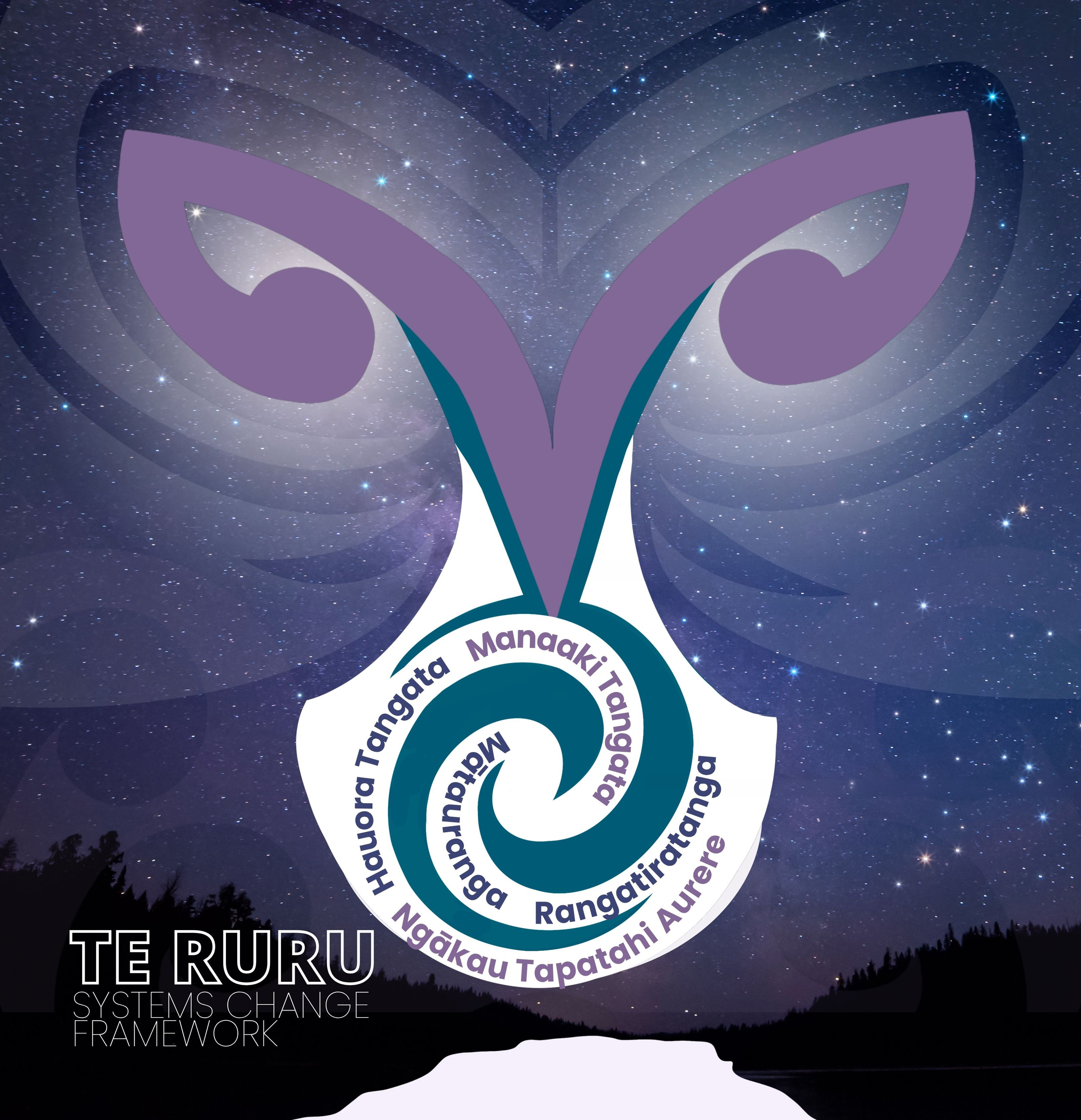
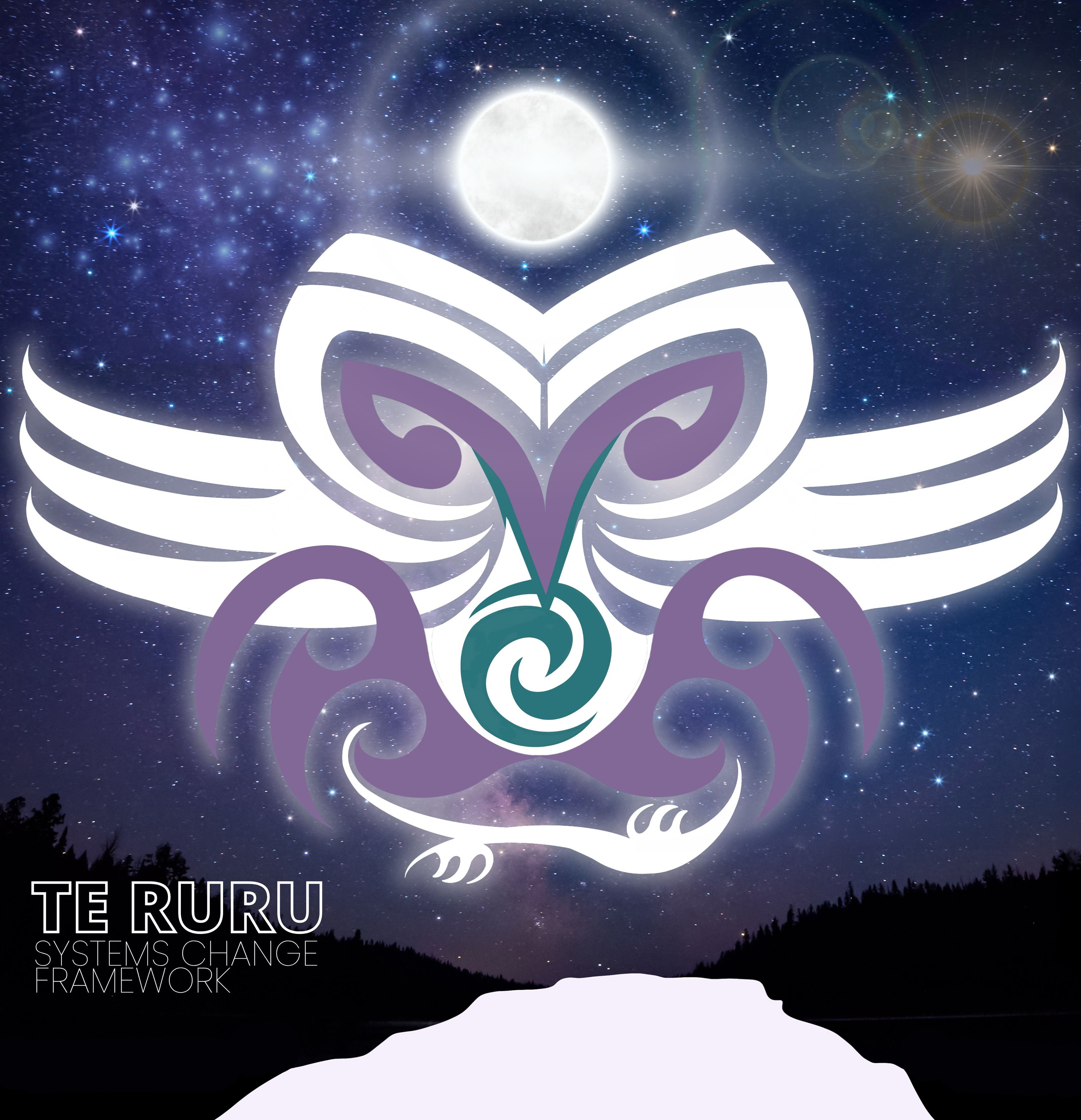
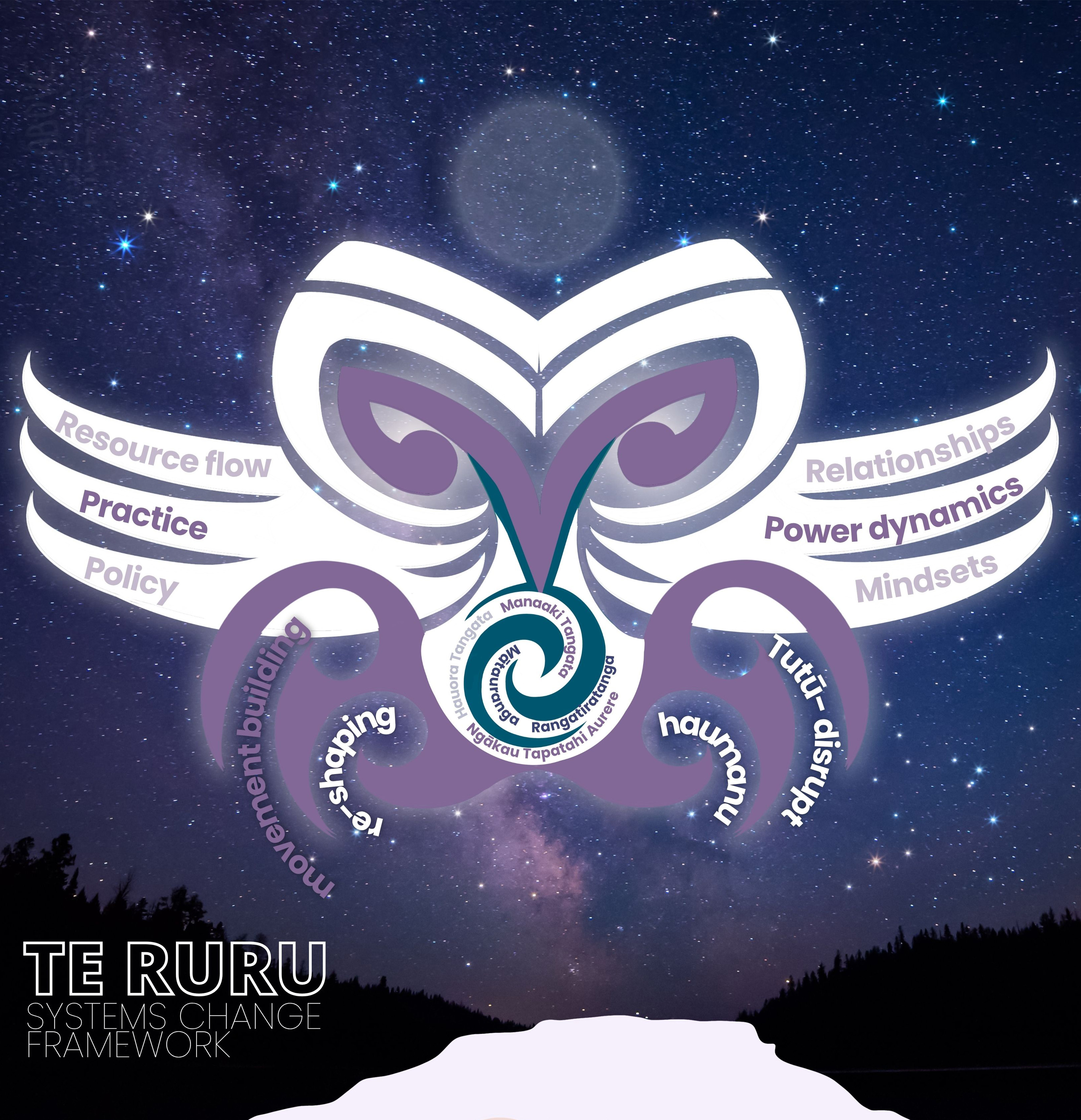
The framework is represented through theimage of Te Ruru (morepork/owl). Its eyes represent perception and the abilityto understand systems across different levels. Its beak represents translationand communication, helping research move between communities, organisations,and decision-makers. The wings represent collective movement and action, whilethe claws reflect the practical work of creating change on the ground alongsidewhānau and communities.
At the centre of Te Ruru sit the tikangaand values of Whakauae, grounding the framework in Kaupapa Māori practice,relationships, and accountability. Te Ruru reminds us that systems change isnot only about changing structures and policies. It is also about healing,restoring relationships, strengthening Indigenous knowledge, and creating theconditions for Māori flourishing.