

Whakauae Research Services Ltd is proud to highlight the work of five talented students and emerging researchers whose projects undertaken throughout 2026 demonstrate the breadth of Māori-led research, innovation, and creative inquiry. From environmental resilience and identity research to design, storytelling, and mana wāhine scholarship, these projects reflect our commitment to supporting the development of Māori researchers and the next generation, while advancing knowledge that serves whānau, hapū and iwi.
Working with the Pūtōrino e Rua project, Lisa Martin (Ngāti Pikiao, Ngāpuhi nui tonu) investigated the relationship between whenua, rākau, and environmental history within the rohe of Ngāti Hauiti. Through dendroecological analysis of tree-ring data, she explored how native trees record environmental change over time, including evidence associated with the 1855 landslide.
Saffron Stanley (Ngāiterangi, Waikato Tainui me Ngāi Tahu) worked alongside Dr Logan Hamley, Intern Lead and Senior Researcher, on Expanding Connection: The Process of Reconnection for Māori Youth, a project exploring how rangatahi Māori understand and connect with their identity. During the studentship, a key focus was the development of a national survey informed by insights gathered through rangatahi-focused wānanga.
Supported through our Te Pae Tawhiti scholarship, Kelsey O’Connor (Ngāti Hauiti me Inia) completed a Master of Arts thesis examining what it means to be wāhine Māori in contemporary Aotearoa. Grounded in Kaupapa Māori Research, Mana Wāhine theory, and pūrākau methodology, the project explored the experiences of twelve wāhine Māori, including takatāpui participants, and their understandings of identity, belonging, and self-expression.
Chris Anderson (Ngāti Rangitihi) collaborated with Utiku Potaka, Researcher and Pou Tikanga, and Luke Enoka, Research Assistant and Pou Āwhina, on our Rapua Te Ara Rangatira project, developing a physical handbook and packaging system for Te Remu Huia governance model. Initially focused on creating a practical design solution, the project evolved into a deeper exploration of how design can communicate cultural narratives and uphold the mana of iwi knowledge.
Te Awanui-a-Rangi Wihongi-Clark’s (Ngāpuhi) studentship centred on the Re-imagining Māori and Home symposium, held in 2025, where participants shared their experiences and perspectives through creative, hands-on activities. Faced with the challenge of communicating a large body of qualitative data in an accessible way, Te Awanui transformed symposium findings into Pātai Asks a Question, a children's book that uses storytelling, illustration, and humour to explore housing, belonging, and community wellbeing.
Together, these projects showcase the diversity of emerging Māori research and creative practice being nurtured through Whakauae Research Services Ltd. While each studentship explored a distinct kaupapa, common themes shine through; a commitment to community-centred research, the strength of mātauranga Māori, and a desire to create knowledge and resources that have tangible value for whānau, hapū, and iwi. From environmental science and identity research to creative dissemination and design innovation, these students have made important contributions that will continue to inform, inspire, and support Māori aspirations into the future.
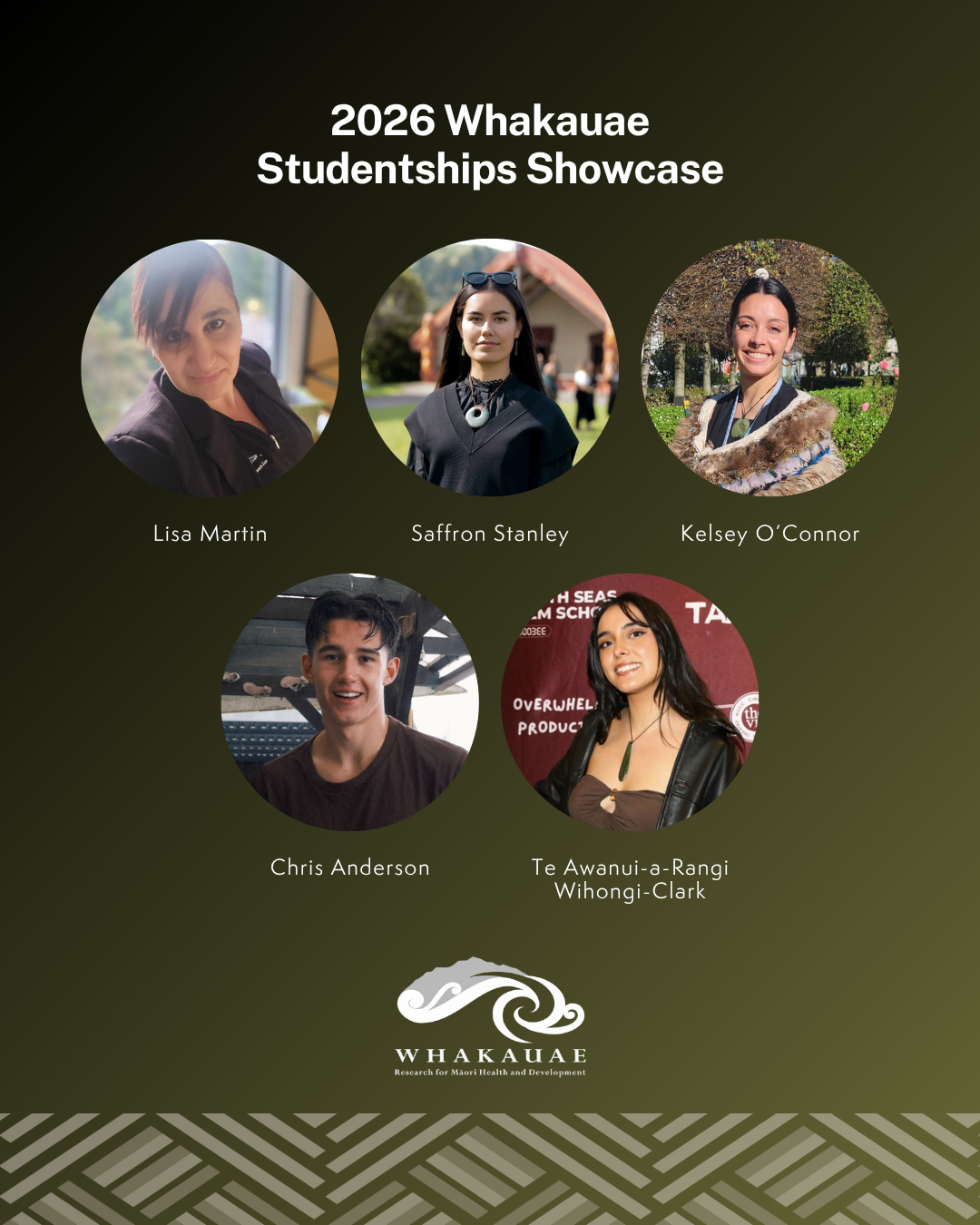
Whakauae Research Services Ltd is proud to highlight the work of five talented students and emerging researchers whose projects undertaken throughout 2026 demonstrate the breadth of Māori-led research, innovation, and creative inquiry. From environmental resilience and identity research to design, storytelling, and mana wāhine scholarship, these projects reflect our commitment to supporting the development of Māori researchers and the next generation, while advancing knowledge that serves whānau, hapū and iwi.
Working with the Pūtōrino e Rua project, Lisa Martin (Ngāti Pikiao, Ngāpuhi nui tonu) investigated the relationship between whenua, rākau, and environmental history within the rohe of Ngāti Hauiti. Through dendroecological analysis of tree-ring data, she explored how native trees record environmental change over time, including evidence associated with the 1855 landslide.
Saffron Stanley (Ngāiterangi, Waikato Tainui me Ngāi Tahu) worked alongside Dr Logan Hamley, Intern Lead and Senior Researcher, on Expanding Connection: The Process of Reconnection for Māori Youth, a project exploring how rangatahi Māori understand and connect with their identity. During the studentship, a key focus was the development of a national survey informed by insights gathered through rangatahi-focused wānanga.
Supported through our Te Pae Tawhiti scholarship, Kelsey O’Connor (Ngāti Hauiti me Inia) completed a Master of Arts thesis examining what it means to be wāhine Māori in contemporary Aotearoa. Grounded in Kaupapa Māori Research, Mana Wāhine theory, and pūrākau methodology, the project explored the experiences of twelve wāhine Māori, including takatāpui participants, and their understandings of identity, belonging, and self-expression.
Chris Anderson (Ngāti Rangitihi) collaborated with Utiku Potaka, Researcher and Pou Tikanga, and Luke Enoka, Research Assistant and Pou Āwhina, on our Rapua Te Ara Rangatira project, developing a physical handbook and packaging system for Te Remu Huia governance model. Initially focused on creating a practical design solution, the project evolved into a deeper exploration of how design can communicate cultural narratives and uphold the mana of iwi knowledge.
Te Awanui-a-Rangi Wihongi-Clark’s (Ngāpuhi) studentship centred on the Re-imagining Māori and Home symposium, held in 2025, where participants shared their experiences and perspectives through creative, hands-on activities. Faced with the challenge of communicating a large body of qualitative data in an accessible way, Te Awanui transformed symposium findings into Pātai Asks a Question, a children's book that uses storytelling, illustration, and humour to explore housing, belonging, and community wellbeing.
Together, these projects showcase the diversity of emerging Māori research and creative practice being nurtured through Whakauae Research Services Ltd. While each studentship explored a distinct kaupapa, common themes shine through; a commitment to community-centred research, the strength of mātauranga Māori, and a desire to create knowledge and resources that have tangible value for whānau, hapū, and iwi. From environmental science and identity research to creative dissemination and design innovation, these students have made important contributions that will continue to inform, inspire, and support Māori aspirations into the future.


