

He mātauranga kua rangiwhāwhā i ēnei Kairangi, hei oranga whenua, oranga awa, oranga tangata. Tēnei a Whakauae e mihi ana.
Whakauae Research Services is excited to share the recent academic success of staff and students associated with our organisation. Luke Enoka (Ngāti Hauiti, Mōkai Pātea, Ngāti Apa, Ngāti Tūwharetoa, Te Ātihaunui-a-Pāpārangi, Ngāti Tama), research assistant and Pou Āwhina, has completed his master’s work and will graduate at the end of the year with a Master’s of Indigenous Studies with Distinction from Te Herenga Waka, Victoria University of Wellington. Meanwhile, Tom Johnson (Te Awa Tupua, Ngāti Hauiti, Kōtimana), Whakauae Research Service’s Design Lead, successfully defended his doctoral work in a recent examination and will have his degree conferred later this year.
In addition, long time subcontractor and PhD student Kiri Parata (Te Ātiawa ki Whakarongotai, Ngāti Toa Rangatira, Ngāti Raukawa, Ngāti Ruanui, Ngāi Tahu) and Aneta Cram (Ngāti Kahungunu, Ngāti Pahauwera), also successfully completed their respective viva voce (oral exam) and will also graduate at the end of 2026.
Together, Aneta, Tom, and Kiri make up the most recent doctoral cohort at Whakauae Research Services. Throughout their PhD journeys, they have supported one another through regular check-in, hui, wānanga, workshops, and writing retreats, sharing the inevitable successes and challenges in completing their doctorate research studies.
In 2023, Aneta was awarded a Whakauae Pae Tawhiti scholarship, which supported her PhD studies at Te Herenga Waka, Victoria University of Wellington. Tom and Kiri were recipients of the Māori Health Research PhD Scholarships from the Health Research Council of New Zealand, with their research hosted by Whakauae. Tom's PhD will be conferred by Te Wānanga Aronui o Tāmaki Makaurau, Auckland University of Technology, and Kiri's PhD will be conferred by Te Kunenga ki Pūrehuroa, Massey University of New Zealand.
While they have each pursued their own independent research projects, a common thread runs through all three kaupapa, namely connection to place, expressed in Aneta’s work as sovereign soils, in Tom’s as awa, and Kiri’s as ūkaipō (origin, source of sustenance).
Aneta's work focuses on Indigenous Evaluation Frameworks (IEFs) grounded in place. As she writes, IEFs are “unique, grounded in the soils of the lands on which they were developed". Tom's work positions Te Awa Tupua (Whanganui River) as an ontology for exploring the relationships between tāne, hauora, and the awa. By positioning Te Awa Tupua as a source of knowledge, his thesis provides an “awa” lens to the literature that connects place, people, and wellbeing. Kiri's thesis examines how contemporary expressions of ūkaipō and the transmission of whānau values contribute to intergenerational living and nurturing from and on ūkaipō.
Luke’s dissertation extends this same thread of connection to place into the context of waka and hapū identity, examining a series of Waka Hoe wānanga of Ngāti Hauiti held on the Rangitīkei River in the 1990s and 2000s, and the connections to whānau wellbeing.
Each of these research projects makes an important contribution to the academy, and even more importantly, to their own communities. The findings have strong potential to guide and support whānau, hapū, Māori and Indigenous researchers as they work toward flourishing futures. The knowledge and skills gained through this work, and the determination it takes to complete it, will stay with them wherever their research journeys lead. These skills and learnings will also help them make meaningful contributions to their whānau, hapū, iwi, and hapori and to their chosen fields.
All of the team at Whakauae congratulate these emerging researchers on their academic success acknowledging the dedication, commitment and sacrifice they all made to achieve these goals. You can read about each of the studies in more detail below.
Aneta Cram’s thesis: ‘Sovereign Soils: An exploration of the development of Indigenous Evaluation Frameworks in Australia, Turtle Island, Hawai’i and Aotearoa’
Aneta Cram is a Kaupapa Māori researcher and evaluator. She is passionate about Indigenous evaluation and good ethical practices when working with Indigenous peoples.
Aneta’s thesis is grounded in the understanding that Indigenous Evaluation Frameworks are shaped by the soils, histories, and communities from which they grow. Where a framework comes from is inseparable from how it works. IEFs are therefore intimate reflections of the cultures and histories of the communities that developed them, as well as their values and expectations for evaluation practice.
Aneta explored the development of five IEFs across Australia, Turtle Island, Hawai'i, and Aotearoa, drawing on interviews with framework developers, literature reviews, and analysis of the frameworks themselves. She examined the contexts in which each framework was developed, the processes behind its design, its content, and how it is used in practice. Her findings highlight the political nature of IEFs, the importance of community validity, and the ways each framework reflects the place and people it serves.
From this research, Aneta developed the Sovereign Soils model, a resource offered to Indigenous communities looking to build their own community-grounded Indigenous Evaluation Framework. For Aneta, the research opened connections with Indigenous evaluation practitioners across Aotearoa and Indigenous nations across the oceans, and she described the journal as a “joy and a privilege”, one that brought both challenge and growth.
Tom Johnson’s thesis: ‘The River Speaks in Many Tongues’
Tom Johnson’s work focuses on the relationships between people and place and the strengths of Indigenous knowledge systems. His PhD was completed by publication, with peer-reviewed papers forming part of his thesis.
Tom began his doctoral journey with “questions in his puku about he couldn’t ignore” about tāne Māori and health and wellbeing. He found “his way back to the awa to answer them”. His thesis gives voice and form to the ontology of place by positioning Te Awa Tupua as a “co-researcher”, opening ways of thinking about connection, knowledge, and hauora that acknowledge the teaching and living nature of the taiao. For Tom, his doctorate work was a journey of “re-remembering, returning to the awa and listening”.
The study explores how tāne Māori sustain their wellbeing through practices grounded in taiao-sourced mātauranga, with the “taiao as first teacher”. These practices are “unfolding inheritances”, expressed in everyday life in ways that enable men to be confident in their own “health-filled ways of being”. The stories of tāne Māori are foregrounded and challenge health and research structures that have historically underserved tāne Māori, evidenced by inequitable outcomes and underrepresentation in the academy.
His thesis is a place-based narrative study drawn from the experiences of a small group of tāne Māori from Te Awa Tupua and Te Awa o Rangitīkei. In keeping with kaupapa Māori traditions, the study recognises that knowledge is generated in relationship: bringing participants, researcher, and whakapapa-based connections between whānau, tūpuna, and the taiao into dialogue. Alongside the accounts of “tāne Māori”, Tom draws on his own positionality as a tane of Te Awa Tupua and Te Awa o Rangitīkei, with his lived experience of “living within the currents of tāne Māori life” informing his research from conception through to dissemination.
Kiri Parata’s thesis: ‘Hoki ki te ūkaipō – whenua and hauora: an exploration of whānau, whenua and restoration for wellbeing’
Kiri Parata works as an evaluation consultant and Māori health researcher, and is the Programme Manager for the Kia Puāwai research programme at Whakauae. Her work centres on Māori wellbeing, and she is most at home in the flaxroots with her own whānau and hapū.
Kiri’s thesis follows three generations of her own whānau, Te Whānau Parata ki Waikanae, through their engagement with whenua tīpuna in Waikanae. Using a kaupapa Māori, hapū-led methodology that draws on interviews, observations, wānanga, and ethnographic documentation, her study explores how contemporary expressions of ūkaipō and the transmission of kaupapa tuku iho (intergenerational values) contribute to whānau wellbeing.
The research finds that engagement with whenua opens access to tikanga and tīpuna wisdom, that collective whānau action strengthens hauora across generations, and that mana whenua can function as a system for change. Together, these findings point to reclaiming whenua as a pathway towards nurturing hauora tangata and advancing mana motuhake (self-determination) for whānau and hapū.
From this research, Kiri developed the Waipunāhau Framework, a locally grounded, strength-based, evaluative tool for whānau-led transformation, with insights for other Māori and Indigenous communities looking for ways to enhance whānau and whenua resilience amid ongoing inequities.
Being involved as an insider researcher with her own whānau, Kiri describes the experience as “a privilege” and hopes the research will encourage others to “explore collectivity and the benefits of coming together for broad whānau outcomes”.
Luke Enoka’s dissertation: Waka Hoe and Grounding Identity for Ngāti Hauiti
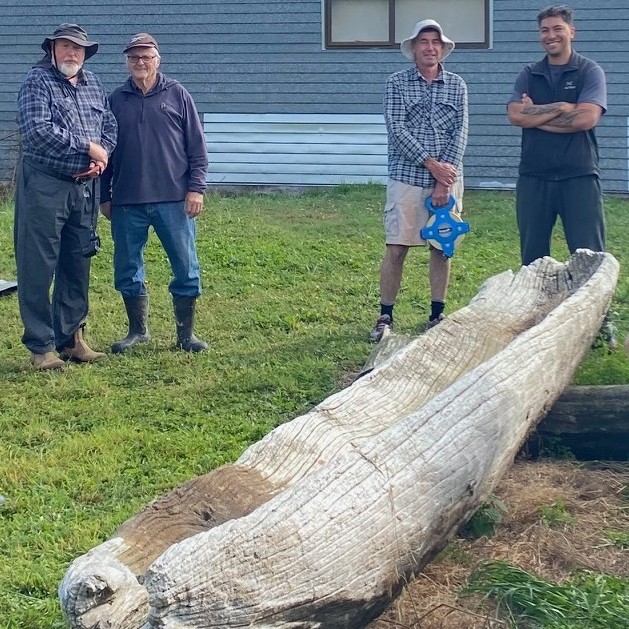
Luke’s master’s work was inspired after learning about two traditional waka tīwai (dug out canoes) located in Rātā and the questions this raised for his whānau about how to care for these taonga and what waka means for hapū and iwi today.
Through these conversations, Luke began to see the potential of waka as a way of reconnecting whānau with whakapapa, tikanga, mātauranga, hapū, iwi, whenua and the awa. His dissertation asks: how has learning whakapapa through wānanga on the Rangitīkei River grounded the tuakiri (identity) of Ngāti Hauiti whānau, and what role does waka revitalisation play in sustaining this connection for mokopuna?
His work contributes to the under-researched field of Māori learning pedagogies, specifically within the context of waka and hapū and iwi-based knowledge transmission. It advocates for place and context-based wānanga and provides evidence on how these wānanga positively impact the hauora and wellbeing of whānau. Waka, in this context, are not just vehicles for the movement of people up and down the Rangitīkei River, they are also a vehicle for the cultural revitalisation of Ngāti Hauiti itself. Luke looks forward to continuing “to support future place-based wānanga that ground our whānau as tangata whenua”.
He mātauranga kua rangiwhāwhā i ēnei Kairangi, hei oranga whenua, oranga awa, oranga tangata. Tēnei a Whakauae e mihi ana.
Whakauae Research Services is excited to share the recent academic success of staff and students associated with our organisation. Luke Enoka (Ngāti Hauiti, Mōkai Pātea, Ngāti Apa, Ngāti Tūwharetoa, Te Ātihaunui-a-Pāpārangi, Ngāti Tama), research assistant and Pou Āwhina, has completed his master’s work and will graduate at the end of the year with a Master’s of Indigenous Studies with Distinction from Te Herenga Waka, Victoria University of Wellington. Meanwhile, Tom Johnson (Te Awa Tupua, Ngāti Hauiti, Kōtimana), Whakauae Research Service’s Design Lead, successfully defended his doctoral work in a recent examination and will have his degree conferred later this year.
In addition, long time subcontractor and PhD student Kiri Parata (Te Ātiawa ki Whakarongotai, Ngāti Toa Rangatira, Ngāti Raukawa, Ngāti Ruanui, Ngāi Tahu) and Aneta Cram (Ngāti Kahungunu, Ngāti Pahauwera), also successfully completed their respective viva voce (oral exam) and will also graduate at the end of 2026.
Together, Aneta, Tom, and Kiri make up the most recent doctoral cohort at Whakauae Research Services. Throughout their PhD journeys, they have supported one another through regular check-in, hui, wānanga, workshops, and writing retreats, sharing the inevitable successes and challenges in completing their doctorate research studies.
In 2023, Aneta was awarded a Whakauae Pae Tawhiti scholarship, which supported her PhD studies at Te Herenga Waka, Victoria University of Wellington. Tom and Kiri were recipients of the Māori Health Research PhD Scholarships from the Health Research Council of New Zealand, with their research hosted by Whakauae. Tom's PhD will be conferred by Te Wānanga Aronui o Tāmaki Makaurau, Auckland University of Technology, and Kiri's PhD will be conferred by Te Kunenga ki Pūrehuroa, Massey University of New Zealand.
While they have each pursued their own independent research projects, a common thread runs through all three kaupapa, namely connection to place, expressed in Aneta’s work as sovereign soils, in Tom’s as awa, and Kiri’s as ūkaipō (origin, source of sustenance).
Aneta's work focuses on Indigenous Evaluation Frameworks (IEFs) grounded in place. As she writes, IEFs are “unique, grounded in the soils of the lands on which they were developed". Tom's work positions Te Awa Tupua (Whanganui River) as an ontology for exploring the relationships between tāne, hauora, and the awa. By positioning Te Awa Tupua as a source of knowledge, his thesis provides an “awa” lens to the literature that connects place, people, and wellbeing. Kiri's thesis examines how contemporary expressions of ūkaipō and the transmission of whānau values contribute to intergenerational living and nurturing from and on ūkaipō.
Luke’s dissertation extends this same thread of connection to place into the context of waka and hapū identity, examining a series of Waka Hoe wānanga of Ngāti Hauiti held on the Rangitīkei River in the 1990s and 2000s, and the connections to whānau wellbeing.
Each of these research projects makes an important contribution to the academy, and even more importantly, to their own communities. The findings have strong potential to guide and support whānau, hapū, Māori and Indigenous researchers as they work toward flourishing futures. The knowledge and skills gained through this work, and the determination it takes to complete it, will stay with them wherever their research journeys lead. These skills and learnings will also help them make meaningful contributions to their whānau, hapū, iwi, and hapori and to their chosen fields.
All of the team at Whakauae congratulate these emerging researchers on their academic success acknowledging the dedication, commitment and sacrifice they all made to achieve these goals. You can read about each of the studies in more detail below.
Aneta Cram’s thesis: ‘Sovereign Soils: An exploration of the development of Indigenous Evaluation Frameworks in Australia, Turtle Island, Hawai’i and Aotearoa’
Aneta Cram is a Kaupapa Māori researcher and evaluator. She is passionate about Indigenous evaluation and good ethical practices when working with Indigenous peoples.
Aneta’s thesis is grounded in the understanding that Indigenous Evaluation Frameworks are shaped by the soils, histories, and communities from which they grow. Where a framework comes from is inseparable from how it works. IEFs are therefore intimate reflections of the cultures and histories of the communities that developed them, as well as their values and expectations for evaluation practice.
Aneta explored the development of five IEFs across Australia, Turtle Island, Hawai'i, and Aotearoa, drawing on interviews with framework developers, literature reviews, and analysis of the frameworks themselves. She examined the contexts in which each framework was developed, the processes behind its design, its content, and how it is used in practice. Her findings highlight the political nature of IEFs, the importance of community validity, and the ways each framework reflects the place and people it serves.
From this research, Aneta developed the Sovereign Soils model, a resource offered to Indigenous communities looking to build their own community-grounded Indigenous Evaluation Framework. For Aneta, the research opened connections with Indigenous evaluation practitioners across Aotearoa and Indigenous nations across the oceans, and she described the journal as a “joy and a privilege”, one that brought both challenge and growth.
Tom Johnson’s thesis: ‘The River Speaks in Many Tongues’
Tom Johnson’s work focuses on the relationships between people and place and the strengths of Indigenous knowledge systems. His PhD was completed by publication, with peer-reviewed papers forming part of his thesis.
Tom began his doctoral journey with “questions in his puku about he couldn’t ignore” about tāne Māori and health and wellbeing. He found “his way back to the awa to answer them”. His thesis gives voice and form to the ontology of place by positioning Te Awa Tupua as a “co-researcher”, opening ways of thinking about connection, knowledge, and hauora that acknowledge the teaching and living nature of the taiao. For Tom, his doctorate work was a journey of “re-remembering, returning to the awa and listening”.
The study explores how tāne Māori sustain their wellbeing through practices grounded in taiao-sourced mātauranga, with the “taiao as first teacher”. These practices are “unfolding inheritances”, expressed in everyday life in ways that enable men to be confident in their own “health-filled ways of being”. The stories of tāne Māori are foregrounded and challenge health and research structures that have historically underserved tāne Māori, evidenced by inequitable outcomes and underrepresentation in the academy.
His thesis is a place-based narrative study drawn from the experiences of a small group of tāne Māori from Te Awa Tupua and Te Awa o Rangitīkei. In keeping with kaupapa Māori traditions, the study recognises that knowledge is generated in relationship: bringing participants, researcher, and whakapapa-based connections between whānau, tūpuna, and the taiao into dialogue. Alongside the accounts of “tāne Māori”, Tom draws on his own positionality as a tane of Te Awa Tupua and Te Awa o Rangitīkei, with his lived experience of “living within the currents of tāne Māori life” informing his research from conception through to dissemination.
Kiri Parata’s thesis: ‘Hoki ki te ūkaipō – whenua and hauora: an exploration of whānau, whenua and restoration for wellbeing’
Kiri Parata works as an evaluation consultant and Māori health researcher, and is the Programme Manager for the Kia Puāwai research programme at Whakauae. Her work centres on Māori wellbeing, and she is most at home in the flaxroots with her own whānau and hapū.
Kiri’s thesis follows three generations of her own whānau, Te Whānau Parata ki Waikanae, through their engagement with whenua tīpuna in Waikanae. Using a kaupapa Māori, hapū-led methodology that draws on interviews, observations, wānanga, and ethnographic documentation, her study explores how contemporary expressions of ūkaipō and the transmission of kaupapa tuku iho (intergenerational values) contribute to whānau wellbeing.
The research finds that engagement with whenua opens access to tikanga and tīpuna wisdom, that collective whānau action strengthens hauora across generations, and that mana whenua can function as a system for change. Together, these findings point to reclaiming whenua as a pathway towards nurturing hauora tangata and advancing mana motuhake (self-determination) for whānau and hapū.
From this research, Kiri developed the Waipunāhau Framework, a locally grounded, strength-based, evaluative tool for whānau-led transformation, with insights for other Māori and Indigenous communities looking for ways to enhance whānau and whenua resilience amid ongoing inequities.
Being involved as an insider researcher with her own whānau, Kiri describes the experience as “a privilege” and hopes the research will encourage others to “explore collectivity and the benefits of coming together for broad whānau outcomes”.
Luke Enoka’s dissertation: Waka Hoe and Grounding Identity for Ngāti Hauiti
Luke’s master’s work was inspired after learning about two traditional waka tīwai (dug out canoes) located in Rātā and the questions this raised for his whānau about how to care for these taonga and what waka means for hapū and iwi today.
Through these conversations, Luke began to see the potential of waka as a way of reconnecting whānau with whakapapa, tikanga, mātauranga, hapū, iwi, whenua and the awa. His dissertation asks: how has learning whakapapa through wānanga on the Rangitīkei River grounded the tuakiri (identity) of Ngāti Hauiti whānau, and what role does waka revitalisation play in sustaining this connection for mokopuna?
His work contributes to the under-researched field of Māori learning pedagogies, specifically within the context of waka and hapū and iwi-based knowledge transmission. It advocates for place and context-based wānanga and provides evidence on how these wānanga positively impact the hauora and wellbeing of whānau. Waka, in this context, are not just vehicles for the movement of people up and down the Rangitīkei River, they are also a vehicle for the cultural revitalisation of Ngāti Hauiti itself. Luke looks forward to continuing “to support future place-based wānanga that ground our whānau as tangata whenua”.


