

On Saturday, 16 August, the Faculty of Medical and Health Sciences in Auckland welcomed the New Zealand Sexual Health Society Conference 2025: Equity through Action - Mana Enhancing Strategies through Sexual Health. This event brought together practitioners, researchers, and community leaders passionate about improving sexual health across Aotearoa.
The atmosphere was vibrant and collaborative, with conversation, reflection, and shared learning at the heart of the day. Central to the conference was a focus on equity, inclusion, and culturally responsive approaches, highlighting how we can work together to strengthen sexual health outcomes for Māori.
Whakauae researchers Dr Tanya Allport and Mr Ben Barton were proud to attend and share their mahi on the Investigating Barriers and Enablers to Preventive HIV Access for Māori project. Their presentation explored the barriers and enablers to preventive HIV access for Māori.
The presentation highlighted a worrying trend: while HIV rates are declining among non-Māori, they continue to rise among Māori. The research emphasised that early, culturally safe access to prevention is crucial, and shared strategies for connecting rangatahi with services that enhance both health outcomes and mana. The project reinforced that community-led, culturally grounded approaches are essential for addressing inequities in sexual health and supporting Māori to thrive.
The conference programme offered rich learning and inspiration, with a clear focus on equity and mana in sexual health.
Highlights include Jade Le Grice’s session on Māori sexual and reproductive self-determination explored how Indigenous-led approaches can strengthen whānau and rangatahi mana while addressing inequities in access.
Hyman Scott shared insights into emerging HIV prevention strategies such as DoxyPEP, highlighting their potential to improve equitable access. The session Youth-Led, Service-Fed; What Young People Really Want from Your Services emphasised the importance of listening to rangatahi voices to shape services that are inclusive, responsive, and fair. National initiatives designed to improve outcomes for underserved populations were showcased in Equity Through Action - Sexual Health Innovation Around the Motu. Leah Rothman’s presentation on sexual wellbeing training provided strategies to support tāngata whaikaha in accessing sexual health education, fostering inclusion and empowerment.
John Fenaughty and colleagues shared work on Teaching Themselves: Sexuality Education for Takatāpui and Rainbow Ākonga, which demonstrated self-directed, culturally responsive learning for queer and gender-diverse rangatahi. Finally, Kay Eddy and her team presented You Do the Test, We’ll Do the Rest, a nurse-led collaboration in the emergency department that promoted complete STBBI screening, showcasing innovative ways to increase testing uptake and reduce inequities in sexual health outcomes.
For the Whakauae team, the conference was not just a professional learning opportunity - it was an experience that nourished both knowledge and spirit. Ben reflected on the strong sense of wairua and belonging in a Māori and Indigenous-centred space. Tanya reflected that the conference was a powerful reminder of the depth and breadth of work being done in sexual health, highlighting diverse voices and perspectives that often go unheard.
Each contribution advanced knowledge while underscoring the importance of inclusivity, equity, and community-driven approaches in shaping the future of sexual health.
The presentations and discussions reinforced the importance of culturally safe, community-led approaches that actively address inequities and enhance Māori mana. The conference sparked new ideas, collaborations, and a renewed sense of purpose for our organisation's ongoing mahi in sexual health.
Citation: Barton, B., Allport, T., Boulton, A. (2025). He Ara Hauora: Improving PrEP access for Māori – Insights from a pilot study. 2025 Sexual Health Conference, Auckland, New Zealand.
On Saturday, 16 August, the Faculty of Medical and Health Sciences in Auckland welcomed the New Zealand Sexual Health Society Conference 2025: Equity through Action - Mana Enhancing Strategies through Sexual Health. This event brought together practitioners, researchers, and community leaders passionate about improving sexual health across Aotearoa.
The atmosphere was vibrant and collaborative, with conversation, reflection, and shared learning at the heart of the day. Central to the conference was a focus on equity, inclusion, and culturally responsive approaches, highlighting how we can work together to strengthen sexual health outcomes for Māori.
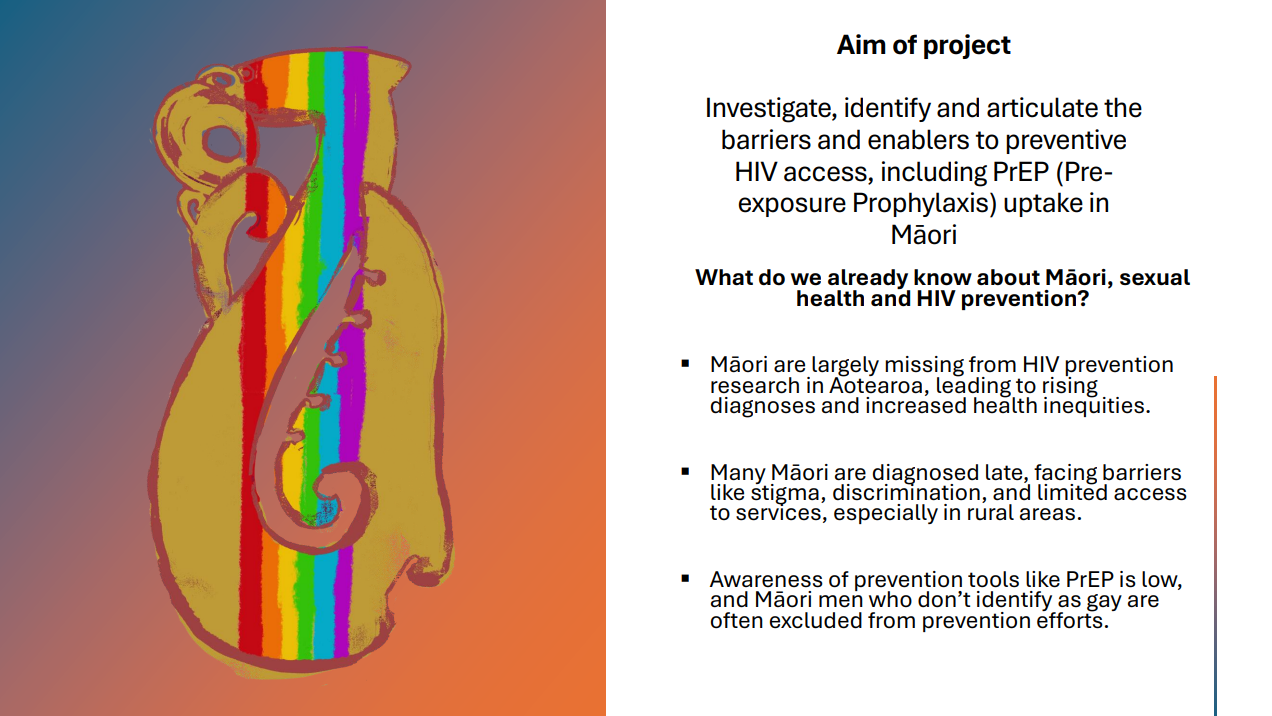
Whakauae researchers Dr Tanya Allport and Mr Ben Barton were proud to attend and share their mahi on the Investigating Barriers and Enablers to Preventive HIV Access for Māori project. Their presentation explored the barriers and enablers to preventive HIV access for Māori.
The presentation highlighted a worrying trend: while HIV rates are declining among non-Māori, they continue to rise among Māori. The research emphasised that early, culturally safe access to prevention is crucial, and shared strategies for connecting rangatahi with services that enhance both health outcomes and mana. The project reinforced that community-led, culturally grounded approaches are essential for addressing inequities in sexual health and supporting Māori to thrive.
The conference programme offered rich learning and inspiration, with a clear focus on equity and mana in sexual health.
Highlights include Jade Le Grice’s session on Māori sexual and reproductive self-determination explored how Indigenous-led approaches can strengthen whānau and rangatahi mana while addressing inequities in access.
Hyman Scott shared insights into emerging HIV prevention strategies such as DoxyPEP, highlighting their potential to improve equitable access. The session Youth-Led, Service-Fed; What Young People Really Want from Your Services emphasised the importance of listening to rangatahi voices to shape services that are inclusive, responsive, and fair. National initiatives designed to improve outcomes for underserved populations were showcased in Equity Through Action - Sexual Health Innovation Around the Motu. Leah Rothman’s presentation on sexual wellbeing training provided strategies to support tāngata whaikaha in accessing sexual health education, fostering inclusion and empowerment.
John Fenaughty and colleagues shared work on Teaching Themselves: Sexuality Education for Takatāpui and Rainbow Ākonga, which demonstrated self-directed, culturally responsive learning for queer and gender-diverse rangatahi. Finally, Kay Eddy and her team presented You Do the Test, We’ll Do the Rest, a nurse-led collaboration in the emergency department that promoted complete STBBI screening, showcasing innovative ways to increase testing uptake and reduce inequities in sexual health outcomes.
For the Whakauae team, the conference was not just a professional learning opportunity - it was an experience that nourished both knowledge and spirit. Ben reflected on the strong sense of wairua and belonging in a Māori and Indigenous-centred space. Tanya reflected that the conference was a powerful reminder of the depth and breadth of work being done in sexual health, highlighting diverse voices and perspectives that often go unheard.
Each contribution advanced knowledge while underscoring the importance of inclusivity, equity, and community-driven approaches in shaping the future of sexual health.
The presentations and discussions reinforced the importance of culturally safe, community-led approaches that actively address inequities and enhance Māori mana. The conference sparked new ideas, collaborations, and a renewed sense of purpose for our organisation's ongoing mahi in sexual health.
Citation: Barton, B., Allport, T., Boulton, A. (2025). He Ara Hauora: Improving PrEP access for Māori – Insights from a pilot study. 2025 Sexual Health Conference, Auckland, New Zealand.


