

Under the bright glow of rākaunui, in the wee hours of Monday, 2nd February 2026, an unveiling ceremony of four contemporary new pou (pillars) was held at Ashhurst Primary School, situated in the town of Ashhurst (Otangaki) at the foot of the Puhangina River Valley. The ceremony was led by Ngāti Tūmōkai Ngāti Hauiti including Manahi Te Hiakai Gardner, Adrian Wagner and Utiku Potaka in support of Rangitāne and the Ashhurst School community.
Utiku Potaka, Researcher at Whakauae Research Services Limited and Ngāti Tūmōkai Manu Taki (hapū delegate) on Te Rūnanga o Ngāti Hauiti, has been working alongside Ashhurst School, sharing Ngāti Tūmōkai kōrero tuku iho (traditional history and traditions) of the whenua, awa and tangata from throughout the valley. This collaboration, along with the kōrero of local iwi, Rangitāne, has been visually represented in the four pou. The pou share visual and written information including tribal narratives, and environmental and ecological knowledge all of which will become interwoven into the school's curriculum and identity.
The unveiling ceremony highlighted the cultural development of Ngāti Tūmōkai and marked a pivotal occasion in which Ngāti Tūmōkai formally returned to the Puhangina Valley to restoke the fires. It reflected many years of wānanga with whānau, local community members and Whakauae led research to unearth the richness of Ngāti Tūmōkai mātauranga unlocking the memories embedded in the Puhangina Valley.
Ngāti Tūmōkai occupation of the valley spreads out to the Oroua and Rangitīkei Rivers thus connecting to the pūrākau of their eponymous tupuna and early explorer, Matangi. Whakauae has undertaken a significant amount of research, uncovering and collecting the mātauranga regarding the pūrākau of Matangi which recounts his journey of discovery as he pursued flocks of kōkō or whirikōkō and naming many places along the way.
The material gathered forms the basis of a detailed tribal narrative of his journey which will be included in the third volume of Te Pūtake this year as well as a story book for young people. This approach provides Whakauae with a means of disseminating mātauranga-ā-iwi and creating resources for Ngāti Hauiti whānau enabling intergenerational knowledge transmission. An example of this was during the recent Ngāti Tūmōkai wānanga in November 2025 where much of the narrative of Matangi was shared with all those in attendance.
Another Whakauae research project connected to the Matangi narrative is the Pūtōrino e Rua research which is a collaborative project with Massey University and Te Rūnanga o Ngā Wairiki Ngāti Apa examining a historical landslide dam outburst at Pūtōrino. The site was named by Matangi when he blew on his Pūtōrino (flute). A significant part of the project included the examination of Māori Land Court minute books and physcially searching for sites identified in the minute books to recover and expand our understanding. These rediscoveries expand Ngāti Hauiti-based mātauranga and some of this kōrero has been visually represented in the pou at Ashhurst School.
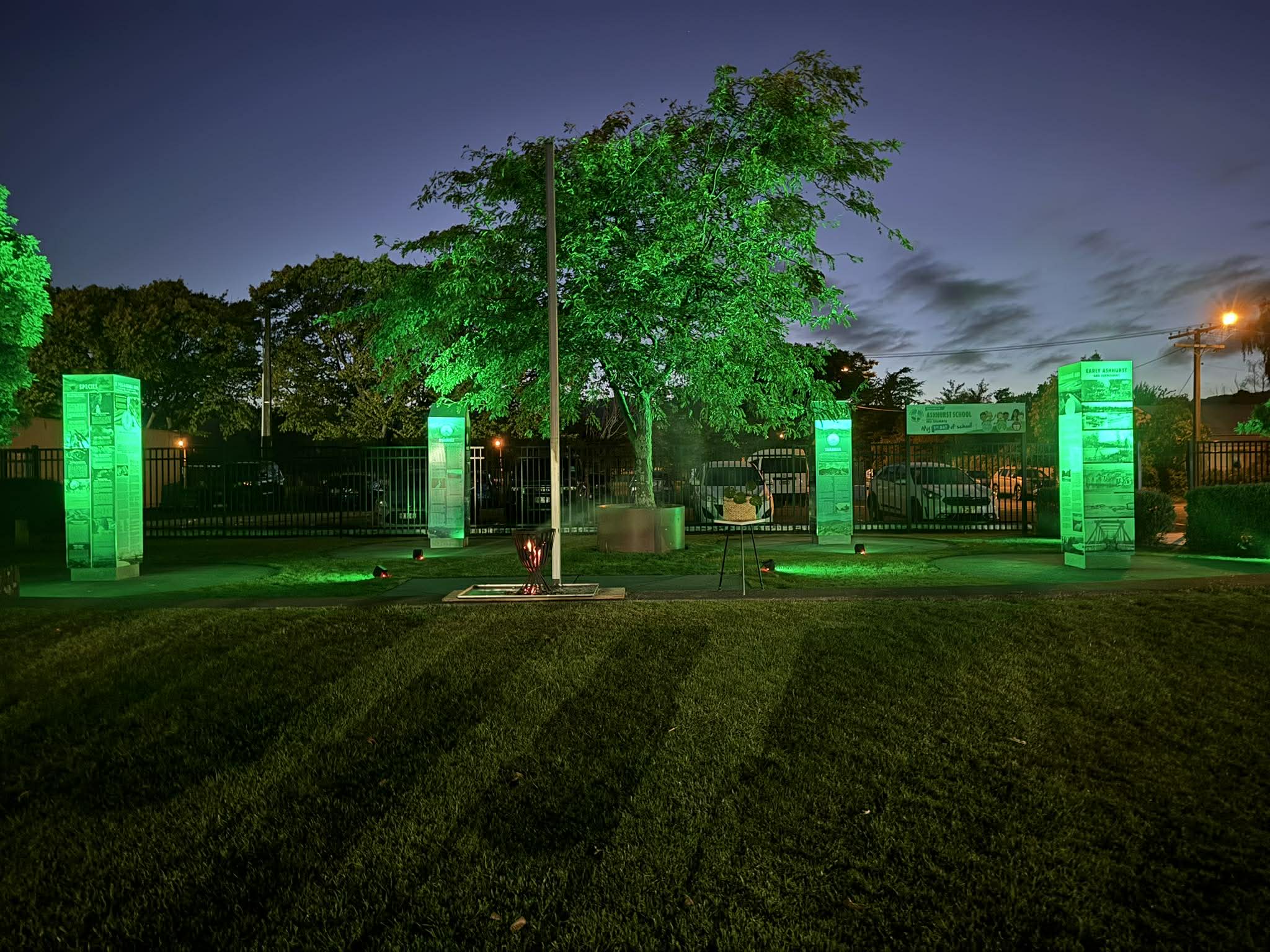
Under the bright glow of rākaunui, in the wee hours of Monday, 2nd February 2026, an unveiling ceremony of four contemporary new pou (pillars) was held at Ashhurst Primary School, situated in the town of Ashhurst (Otangaki) at the foot of the Puhangina River Valley. The ceremony was led by Ngāti Tūmōkai Ngāti Hauiti including Manahi Te Hiakai Gardner, Adrian Wagner and Utiku Potaka in support of Rangitāne and the Ashhurst School community.
Utiku Potaka, Researcher at Whakauae Research Services Limited and Ngāti Tūmōkai Manu Taki (hapū delegate) on Te Rūnanga o Ngāti Hauiti, has been working alongside Ashhurst School, sharing Ngāti Tūmōkai kōrero tuku iho (traditional history and traditions) of the whenua, awa and tangata from throughout the valley. This collaboration, along with the kōrero of local iwi, Rangitāne, has been visually represented in the four pou. The pou share visual and written information including tribal narratives, and environmental and ecological knowledge all of which will become interwoven into the school's curriculum and identity.
The unveiling ceremony highlighted the cultural development of Ngāti Tūmōkai and marked a pivotal occasion in which Ngāti Tūmōkai formally returned to the Puhangina Valley to restoke the fires. It reflected many years of wānanga with whānau, local community members and Whakauae led research to unearth the richness of Ngāti Tūmōkai mātauranga unlocking the memories embedded in the Puhangina Valley.
Ngāti Tūmōkai occupation of the valley spreads out to the Oroua and Rangitīkei Rivers thus connecting to the pūrākau of their eponymous tupuna and early explorer, Matangi. Whakauae has undertaken a significant amount of research, uncovering and collecting the mātauranga regarding the pūrākau of Matangi which recounts his journey of discovery as he pursued flocks of kōkō or whirikōkō and naming many places along the way.
The material gathered forms the basis of a detailed tribal narrative of his journey which will be included in the third volume of Te Pūtake this year as well as a story book for young people. This approach provides Whakauae with a means of disseminating mātauranga-ā-iwi and creating resources for Ngāti Hauiti whānau enabling intergenerational knowledge transmission. An example of this was during the recent Ngāti Tūmōkai wānanga in November 2025 where much of the narrative of Matangi was shared with all those in attendance.
Another Whakauae research project connected to the Matangi narrative is the Pūtōrino e Rua research which is a collaborative project with Massey University and Te Rūnanga o Ngā Wairiki Ngāti Apa examining a historical landslide dam outburst at Pūtōrino. The site was named by Matangi when he blew on his Pūtōrino (flute). A significant part of the project included the examination of Māori Land Court minute books and physcially searching for sites identified in the minute books to recover and expand our understanding. These rediscoveries expand Ngāti Hauiti-based mātauranga and some of this kōrero has been visually represented in the pou at Ashhurst School.


