

On Saturday, 22nd November 2025, Te Horo i Whakakotahi a Pūtōrino e Rua Project (discovering the past, present and future impact on land, water and people caused by the Pūtōrino landslide) hosted wānanga at Rātā Marae. This collaborative project involves Whakauae Research Services Limited (Ngāti Hauiti), He Waka Uru Ora (Ngā Wairiki Ngāti Apa), and Massey University. It examines the significance of the 1855 landslide dam outburst at Pūtōrino (near Rātā) on the Rangitīkei River, which was triggered by an earthquake in the Wairarapa.
The wānanga was attended by Ngāti Hauiti and Ngāti Apa whānau, residents, regional council representatives, historians, students, and local environmental groups. Dr Callum Rees, one of the lead researchers from Massey University, facilitated and introduced the event, describing the distinct fields of research as they related to the broader research inquiry.
Utiku Potaka, another project lead researcher, from Whakauae, and tribal historian for Ngāti Hauiti, spoke about the special relationship that local iwi, Ngāti Hauiti and Ngāti Apa, have with the whenua and Te Awa o Rangitīkei. He shared several mana whenua narratives, including the origins of place names, tupua and atua, and the importance of living with the natural environment.
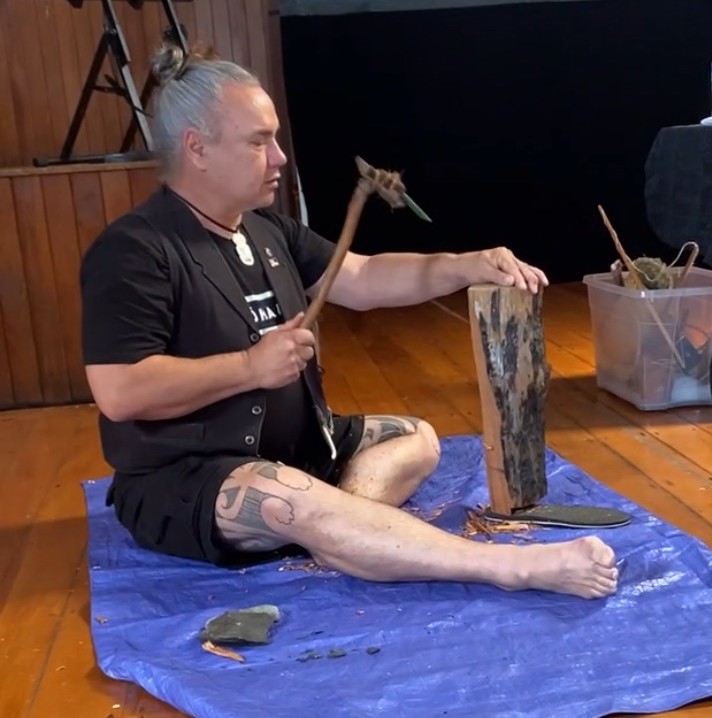
Warren Warbrick (Rangitāne, Ngāti Hauiti, Ngāti Tūmōkai, and Te Arawa) discussed the significance of kōhatu (stones) as natural resources for creating tools such as toki (adzes) used in the construction of whare and waka. He emphasised the importance of trading kōhatu and how it relied on maintaining good relationships with neighbouring hapū and iwi across the motu. His demonstration of the use of traditional toki was a highlight of the wānanga which captivated all in attendance.
Dylis Johns from the University of Auckland reflected on her career as a conservationist dedicated to preserving organic wet taonga, including waka. She discussed her efforts to establish satellite laboratories and to collaborate with hapū throughout the motu as they strove to preserve their traditional waka. Dylis also touched on local waka requiring conservation including the Te Hou Hou and Pūtōrino waka tīwai (dugout canoes).
Dr. Andrew Wells, a senior ecologist, introduced the science of dendrochronology, or tree-ring analysis, highlighting its value in understanding land and its history. This coming summer, Andrew, alongside a Whakauae intern, will analyse and date trees on and around the Pūtōrino landslide site. The intention of this work is to provide additional evidence that supports the landslide data.
Jeff Watson, a retired hydrologist, shared his knowledge of flooding of the Rangitīkei River near Mangaweka. He discussed his research on the significance of the infamous1897 flood and how it helped him produce a hydrograph timeline of the Rangitīkei River. This work aims to improve the understanding of historical flooding patterns.
The wānanga successfully brought together diverse communities interested in the 1855 flood event, encouraging discussions about the lessons learned, especially in light of climate change and the likelihood of future natural disasters and flooding. A final wānanga will take place mid 2026.

On Saturday, 22nd November 2025, Te Horo i Whakakotahi a Pūtōrino e Rua Project (discovering the past, present and future impact on land, water and people caused by the Pūtōrino landslide) hosted wānanga at Rātā Marae. This collaborative project involves Whakauae Research Services Limited (Ngāti Hauiti), He Waka Uru Ora (Ngā Wairiki Ngāti Apa), and Massey University. It examines the significance of the 1855 landslide dam outburst at Pūtōrino (near Rātā) on the Rangitīkei River, which was triggered by an earthquake in the Wairarapa.
The wānanga was attended by Ngāti Hauiti and Ngāti Apa whānau, residents, regional council representatives, historians, students, and local environmental groups. Dr Callum Rees, one of the lead researchers from Massey University, facilitated and introduced the event, describing the distinct fields of research as they related to the broader research inquiry.
Utiku Potaka, another project lead researcher, from Whakauae, and tribal historian for Ngāti Hauiti, spoke about the special relationship that local iwi, Ngāti Hauiti and Ngāti Apa, have with the whenua and Te Awa o Rangitīkei. He shared several mana whenua narratives, including the origins of place names, tupua and atua, and the importance of living with the natural environment.
Warren Warbrick (Rangitāne, Ngāti Hauiti, Ngāti Tūmōkai, and Te Arawa) discussed the significance of kōhatu (stones) as natural resources for creating tools such as toki (adzes) used in the construction of whare and waka. He emphasised the importance of trading kōhatu and how it relied on maintaining good relationships with neighbouring hapū and iwi across the motu. His demonstration of the use of traditional toki was a highlight of the wānanga which captivated all in attendance.
Dylis Johns from the University of Auckland reflected on her career as a conservationist dedicated to preserving organic wet taonga, including waka. She discussed her efforts to establish satellite laboratories and to collaborate with hapū throughout the motu as they strove to preserve their traditional waka. Dylis also touched on local waka requiring conservation including the Te Hou Hou and Pūtōrino waka tīwai (dugout canoes).
Dr. Andrew Wells, a senior ecologist, introduced the science of dendrochronology, or tree-ring analysis, highlighting its value in understanding land and its history. This coming summer, Andrew, alongside a Whakauae intern, will analyse and date trees on and around the Pūtōrino landslide site. The intention of this work is to provide additional evidence that supports the landslide data.
Jeff Watson, a retired hydrologist, shared his knowledge of flooding of the Rangitīkei River near Mangaweka. He discussed his research on the significance of the infamous1897 flood and how it helped him produce a hydrograph timeline of the Rangitīkei River. This work aims to improve the understanding of historical flooding patterns.
The wānanga successfully brought together diverse communities interested in the 1855 flood event, encouraging discussions about the lessons learned, especially in light of climate change and the likelihood of future natural disasters and flooding. A final wānanga will take place mid 2026.


