

On 8 July this year, the team at Whakauae gathered to commemorate Puanga mā Matariki at Rātā Marae. Puanga mā Matariki is a time for us at Whakauae to share kōrero, kai, and wānanga; reflect on the year that has been; and welcome the new year.
This year’s wānanga ran in two parts with the first focused on imbedding two familiar waiata into our teams’ repertoire of songs. The waiata included I waenga awaawa, used for the cultural framework of the Kia Puāwai Health Research Council programme grant and Taku whenua, a pao composed in the early 19th Century. Learning about their origins, purpose and meaning helped us as we practiced singing them.
The second part of the wānanga was a hīkoi, visiting some of the places named in the waiata I waenga awaawa, helping to reinforce what we had learnt. We plan to use both waiata as our primary waitata tautoko going forward. Despite the wet weather we experienced on our hīkoi, we were thankful for the short intervals of sunshine that allowed us to visit the sites of significance including the place where Hauiti lived.
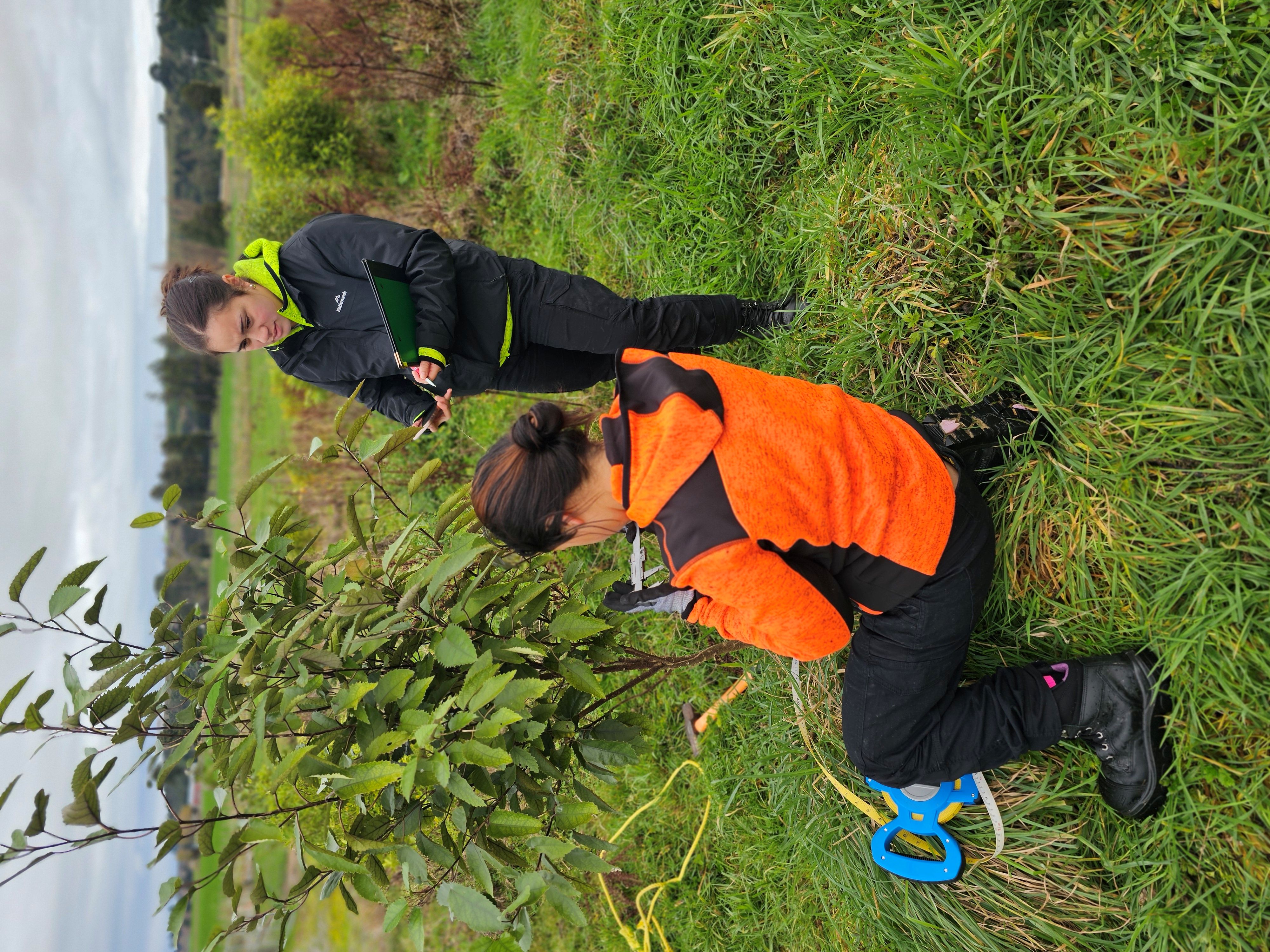
The wānanga was also an opportunity to welcome university students Tiaria Potaka (Ngāti Hauiti, Tainui, Whanganui, Taranaki) and Kahupounamu Potaka (Ngāti Hauiti, Ngāti Apa, Te Ātihaunui-ā-Pāpārangi, Ngāti Tūwharetoa, Ngāti Manawa), who recently joined the Whakauae studentship programme. Their studentships have been sponsored by Te Maru o Ruahine Trust as part of the Ngāti Hauiti Kāti Mahana (Greenhouse Gas Emissions) project and will run during the winter and summer holiday breaks. Based at Rātā, the studentships will enable Tiara and Kahupounamu to contribute to the work of the project, support their academic journey as full-time students, and assist in building their research capability through practical work experience. Each student will play a critical role assisting in data collection on 15 whenua blocks, technical development and mapping, community engagement, farm practice documentation and environmental assessments. The culmination of all this work will be the development of whenua-specific greenhouse gas reduction strategies for Ngāti Hauiti.

On 8 July this year, the team at Whakauae gathered to commemorate Puanga mā Matariki at Rātā Marae. Puanga mā Matariki is a time for us at Whakauae to share kōrero, kai, and wānanga; reflect on the year that has been; and welcome the new year.
This year’s wānanga ran in two parts with the first focused on imbedding two familiar waiata into our teams’ repertoire of songs. The waiata included I waenga awaawa, used for the cultural framework of the Kia Puāwai Health Research Council programme grant and Taku whenua, a pao composed in the early 19th Century. Learning about their origins, purpose and meaning helped us as we practiced singing them.
The second part of the wānanga was a hīkoi, visiting some of the places named in the waiata I waenga awaawa, helping to reinforce what we had learnt. We plan to use both waiata as our primary waitata tautoko going forward. Despite the wet weather we experienced on our hīkoi, we were thankful for the short intervals of sunshine that allowed us to visit the sites of significance including the place where Hauiti lived.
The wānanga was also an opportunity to welcome university students Tiaria Potaka (Ngāti Hauiti, Tainui, Whanganui, Taranaki) and Kahupounamu Potaka (Ngāti Hauiti, Ngāti Apa, Te Ātihaunui-ā-Pāpārangi, Ngāti Tūwharetoa, Ngāti Manawa), who recently joined the Whakauae studentship programme. Their studentships have been sponsored by Te Maru o Ruahine Trust as part of the Ngāti Hauiti Kāti Mahana (Greenhouse Gas Emissions) project and will run during the winter and summer holiday breaks. Based at Rātā, the studentships will enable Tiara and Kahupounamu to contribute to the work of the project, support their academic journey as full-time students, and assist in building their research capability through practical work experience. Each student will play a critical role assisting in data collection on 15 whenua blocks, technical development and mapping, community engagement, farm practice documentation and environmental assessments. The culmination of all this work will be the development of whenua-specific greenhouse gas reduction strategies for Ngāti Hauiti.


