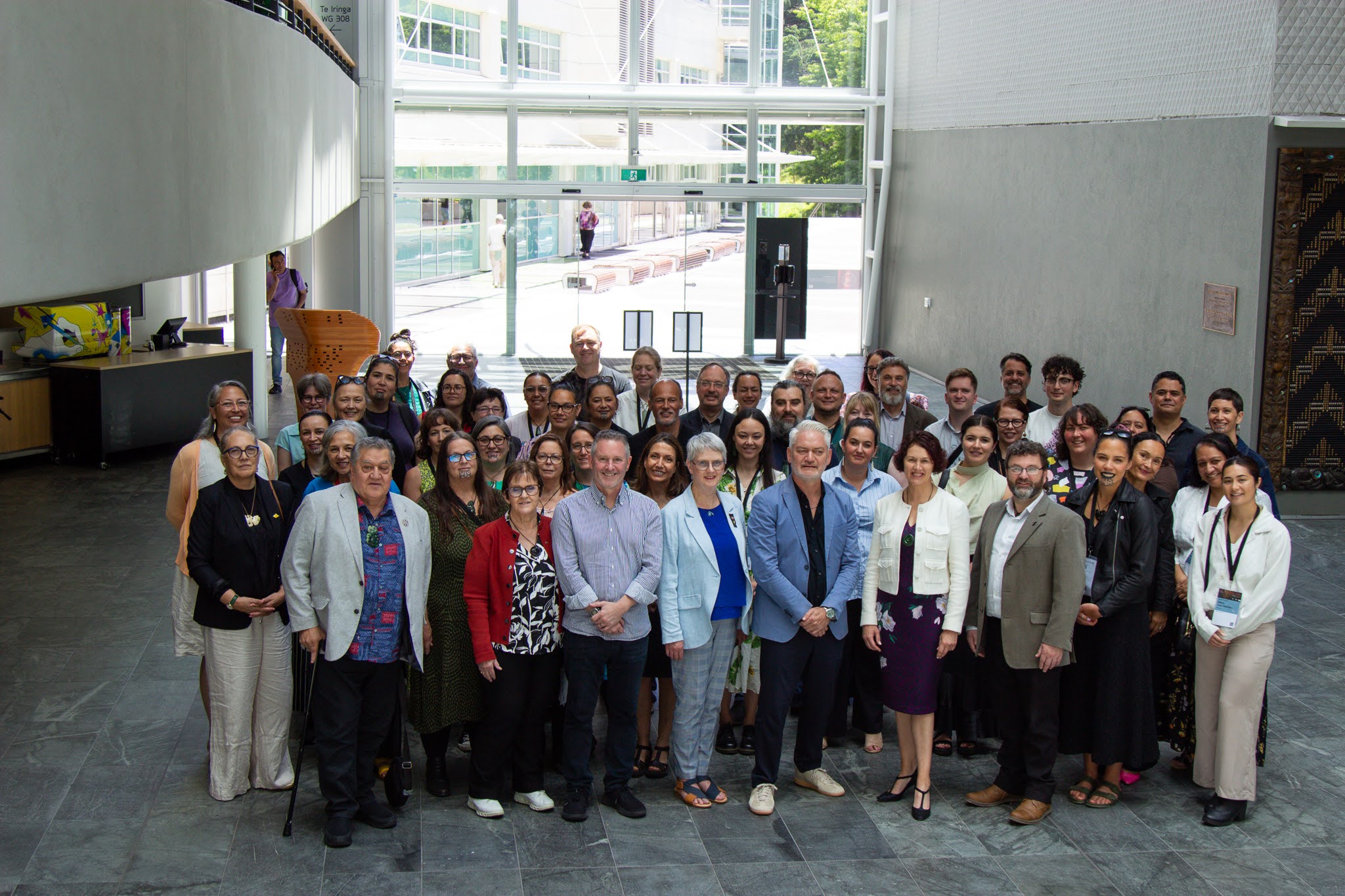
Aotearoa, and specifically Te Apārangi Royal Society and Auckland University of Technology, played hosts to the Aotearoa Tri-Academy Indigenous Summit on 24-26 November 2025. The three-day summit was the second in a series of three events hosted by the Royal Academies of Canada, Aotearoa and Australia. This year’s summit brought together Indigenous Fellows, thought leaders, knowledge holders and students from across Aotearoa, Canada and Australia to progress the kaupapa of a collaborative international Indigenous-led research agenda.
This year’s summit focused on three key themes:
Director of Whakauae Research Services Limited, Dr Amohia Boulton was invited to present on Theme 1 in a session entitled Indigenous research – what Indigenous research looks like when we set our own research agenda. Dr Boulton joined other speakers whose research work occurs outside the mainstream universities, including Manu Caddie and Dr Joni Angeli-Gordon (Te Wānanga o Aotearoa). Distinguished Professor Graham Hingangaroa Smith chaired the session. Amohia’s presentation outlined the origins of Whakauae, the unique position we occupy in the research landscape, what our Iwi-owners expect of us, our experiences, and our learnings. Amohia concluded her presentation with some thoughts regarding the extent to which we have truly indigenised the Academy.
There were a number of highlights from attending the summit, not the least of which was the opportunity to re-connect with a range of Māori scholars and academics outside of the discipline of health. Arguably opportunities for Māori academics to come together face to face and discuss strategic issues of concern, irrespective of discipline, have been few and far between since Covid-19. A further highlight of the summit was being able to meet and spend time with Australian and Canadian leaders, academics and scholars whose work has influenced our scholarship here in Aotearoa. Dr Boulton was especially excited to meet Prof Marie Battiste, whose book Reclaiming Indigenous Voice and Vision, published in 2000 was foundational to Dr Boulton’s postdoctoral studies undertaken in Canada from 2006-7, and Prof Maggie Kovach, author of Indigenous Methodologies: Characteristics, Conversations, and Contexts. She was also able to reconnect with Professor Aimée Craft, University Research Chair Nibi miinawaa aki inaakonigewin: Indigenous governance in relationship with land and water at the University of Ottawa. Amohia and Aimée first met over 15 years ago, and Whakauae has hosted Aimée and her colleagues when they visited Aotearoa to attend one of the first Ngā Pae o te Maramatanga-hosted International Indigenous Research Conferences. A final highlight for Dr Boulton was meeting her former boss from Te Puni Kōkiri, Paora Ammunson, who is now Deputy Vice-Chancellor Māori at Te Kunenga ki Pūrehuroa – Massey University and who led the pōwhiri on the first day of the summit.
At the conclusion of the Summit, a communique calling for "a global research landscape that is inclusive, respectful, and transformative, one that recognises Indigenous Peoples as equal partners and leaders in the pursuit and application of knowledge” was issued by the delegates of the summit. The Presidents of the Royal Society Te Apārangi, the Royal Society of Canada, and the Australian Academy of Science have since responded to the communique with a statement reaffirming their commitment to work together to help protect Indigenous Peoples' rights to determine their own research agendas, to explore and preserve traditional knowledge systems, to participate actively in research, and to benefit from its applications and outcomes.
The third Summit of the Tri-Academy Partnership between the Royal Society Te Apārangi, the Royal Society of Canada, and the Australian Academy of Science will be hosted by the Australian Academy and its partners this year.
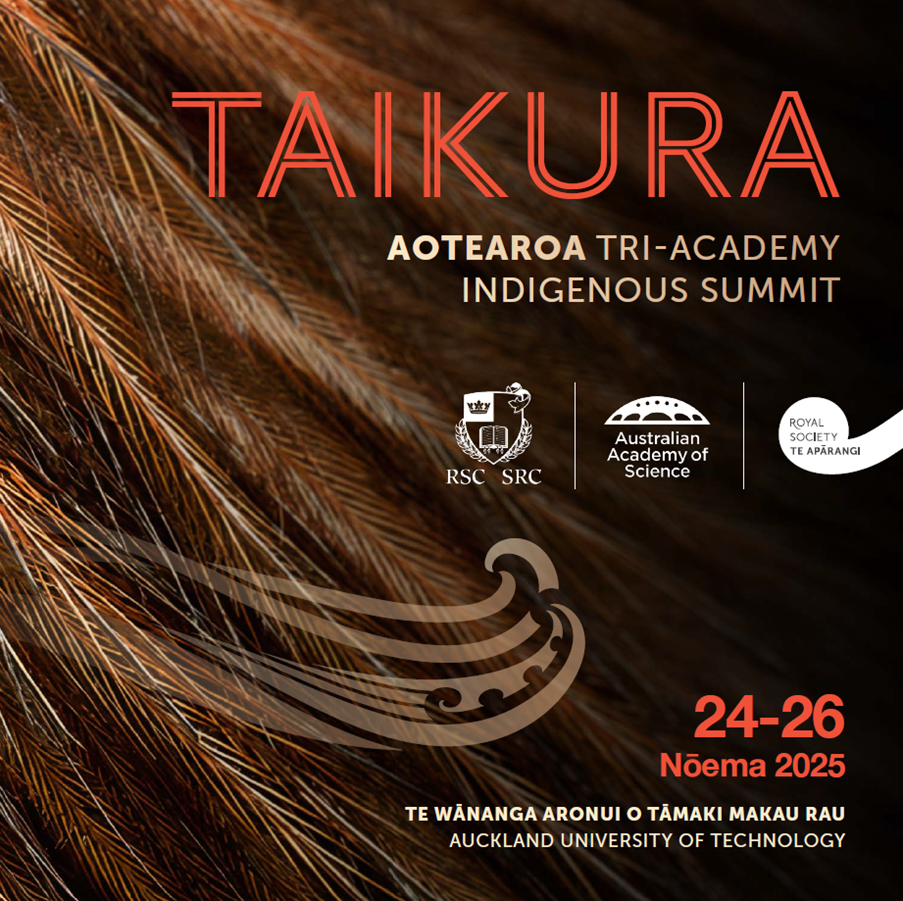
Aotearoa, and specifically Te Apārangi Royal Society and Auckland University of Technology, played hosts to the Aotearoa Tri-Academy Indigenous Summit on 24-26 November 2025. The three-day summit was the second in a series of three events hosted by the Royal Academies of Canada, Aotearoa and Australia. This year’s summit brought together Indigenous Fellows, thought leaders, knowledge holders and students from across Aotearoa, Canada and Australia to progress the kaupapa of a collaborative international Indigenous-led research agenda.
This year’s summit focused on three key themes:
Director of Whakauae Research Services Limited, Dr Amohia Boulton was invited to present on Theme 1 in a session entitled Indigenous research – what Indigenous research looks like when we set our own research agenda. Dr Boulton joined other speakers whose research work occurs outside the mainstream universities, including Manu Caddie and Dr Joni Angeli-Gordon (Te Wānanga o Aotearoa). Distinguished Professor Graham Hingangaroa Smith chaired the session. Amohia’s presentation outlined the origins of Whakauae, the unique position we occupy in the research landscape, what our Iwi-owners expect of us, our experiences, and our learnings. Amohia concluded her presentation with some thoughts regarding the extent to which we have truly indigenised the Academy.
There were a number of highlights from attending the summit, not the least of which was the opportunity to re-connect with a range of Māori scholars and academics outside of the discipline of health. Arguably opportunities for Māori academics to come together face to face and discuss strategic issues of concern, irrespective of discipline, have been few and far between since Covid-19. A further highlight of the summit was being able to meet and spend time with Australian and Canadian leaders, academics and scholars whose work has influenced our scholarship here in Aotearoa. Dr Boulton was especially excited to meet Prof Marie Battiste, whose book Reclaiming Indigenous Voice and Vision, published in 2000 was foundational to Dr Boulton’s postdoctoral studies undertaken in Canada from 2006-7, and Prof Maggie Kovach, author of Indigenous Methodologies: Characteristics, Conversations, and Contexts. She was also able to reconnect with Professor Aimée Craft, University Research Chair Nibi miinawaa aki inaakonigewin: Indigenous governance in relationship with land and water at the University of Ottawa. Amohia and Aimée first met over 15 years ago, and Whakauae has hosted Aimée and her colleagues when they visited Aotearoa to attend one of the first Ngā Pae o te Maramatanga-hosted International Indigenous Research Conferences. A final highlight for Dr Boulton was meeting her former boss from Te Puni Kōkiri, Paora Ammunson, who is now Deputy Vice-Chancellor Māori at Te Kunenga ki Pūrehuroa – Massey University and who led the pōwhiri on the first day of the summit.
At the conclusion of the Summit, a communique calling for "a global research landscape that is inclusive, respectful, and transformative, one that recognises Indigenous Peoples as equal partners and leaders in the pursuit and application of knowledge” was issued by the delegates of the summit. The Presidents of the Royal Society Te Apārangi, the Royal Society of Canada, and the Australian Academy of Science have since responded to the communique with a statement reaffirming their commitment to work together to help protect Indigenous Peoples' rights to determine their own research agendas, to explore and preserve traditional knowledge systems, to participate actively in research, and to benefit from its applications and outcomes.
The third Summit of the Tri-Academy Partnership between the Royal Society Te Apārangi, the Royal Society of Canada, and the Australian Academy of Science will be hosted by the Australian Academy and its partners this year.