September 22, 2026

He Pūkenga Wai Symposium 2026

Two members of the Whakauae team recently attended the He Pūkenga Wai Symposium, held at the Whanganui Function Centre on 5 August. It was a day of shared knowledge, insights, and discussion, as uri came together to explore the many ways the people are working to improve and protect the health and wellbeing of Te Awa Tupua.

The day was led out by karakia from Hoani Ponga, rangatahi Charlie Peina and Te Matau Beckham with the help of Rongomaitawhiri Ah-Ching (Awa Fm and Ngā Tangata Tiaki Trustee).  A keynote presentation from Toiora Hawira followed, who described how the art of traditional navigation reclamation had contributed to his journey from kaiwhakatere trainee to Captain of the Ngahiraka Mai Tawhiti waka. He shared how navigators read the stars, ocean swells, follow migratory birds, and seasonal markers like Puanga to find direction and mark time.  

The next keynote speakers, David Hamilton and Liliana Pagliero from the Australian Rivers Institute shared slides about transforming river catchments. They talked about Building Catchment Resilience (BCR): A spatial modelling and economic framework that helps managers evaluate restoration investments, such as wetland creation, gully repair, and riparian planting, to lower sediment and nutrient loads. It has been utilised internationally, including framework applications with Whanganui Iwi on the Whanganui River. They were joined on stage by Javell Pereka, Jake Robinson, and Aimee Kopeke, who have been working alongside them on this planning tool.

During the day, participants had the opportunity to attend four workshops:
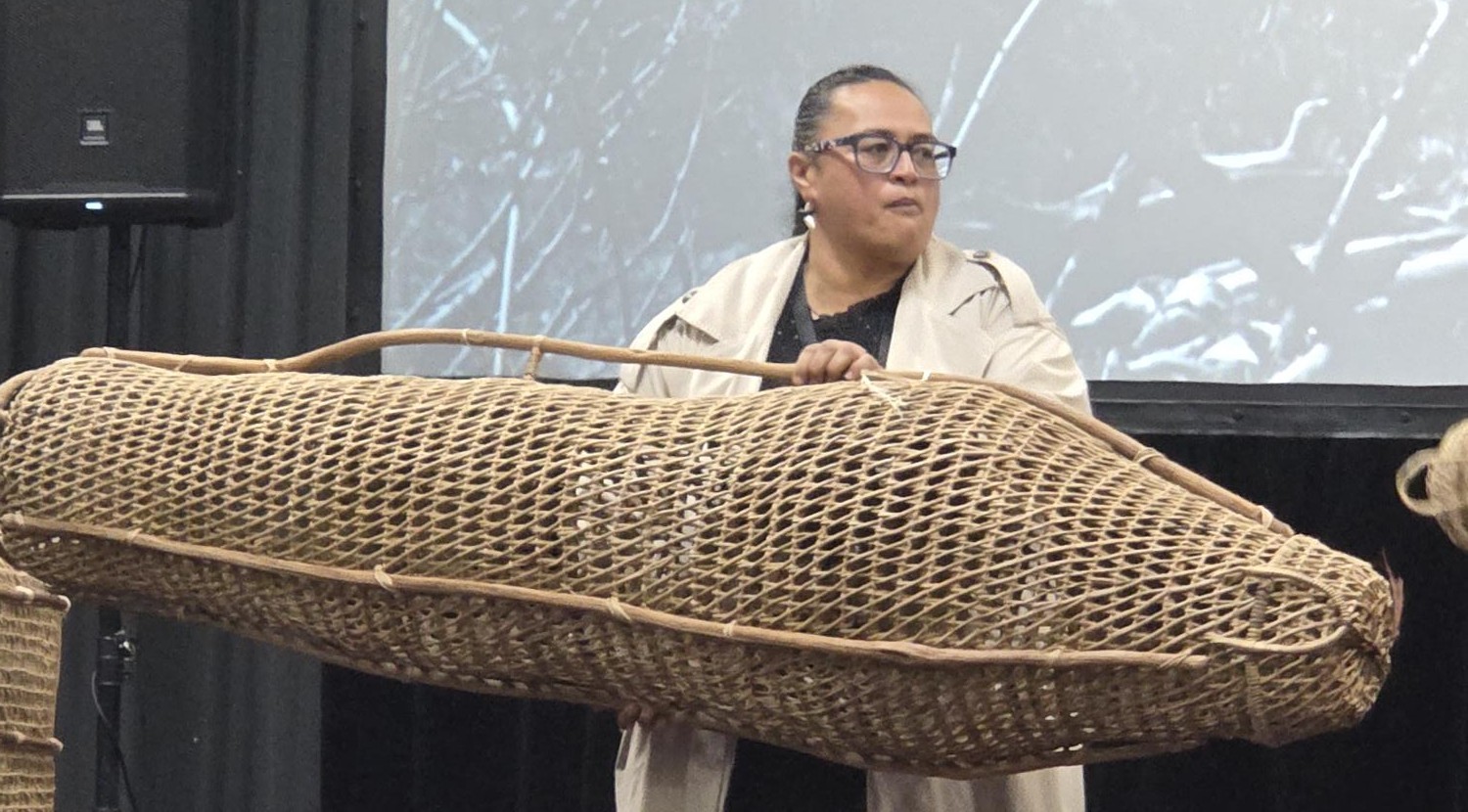
  • Te Pā Auroa – presented by Bubby Tamakehu, Jay Rerekura, Hoani Ponga and Mathew McIntyre-Wilson who reflected on the successes and challenges around recreating the traditional Te Pā Auroa (Eel Weirs). One of the challenges was trying to recreate a weir from watching video archives. The videos showed the engineering skills and expertise our tūpuna used when building these huge structures in formidable water conditions.
  • Mouri Tūroa –   presented by Project Manager Gordon Cribb, Creedence Lingman and Cameron Ryan they talked about the success of the four-year initiative designed to improve the health and wellbeing of the Whanganui River and to create nature-based employment opportunities for uri. The initiative included waterway protection through fencing, native planting, and maintenance; freshwater fish bio-diversity habitat restoration; animal and plant pest control to protect plantings and eco-sourced native tree nurseries. Cameron from Pīwaiwaka Farms talked about their Native Plant Nursery and their contribution to the project.
  • Kokohuia Wetlands – presented by Damien Kuru, Carlos Rippon, and Kimmy Ranginui, a biodiversity project aimed at restoring Kokohuia Wetlands. Their goal is to create a thriving habitat for the whenua by allowing the population of diverse species to adapt to environmental changes.
  • Marae Energy Resilience –Troy Brown was joined by Richard McKenzie (Te Whawhaki Trust Chairperson), Fleur Brown, Aroha Te Huia-Ngatuere, and Matiu Tarau (Tū Mai Rā, CEO) who through a round table discussion talked to the insights of having solar energy installed at their respective marae. They detailed the process they went through with whānau to achieve this, also describing the challenges they navigated in getting their projects past the post.
Bubby Tamakehu holding a hīnaki

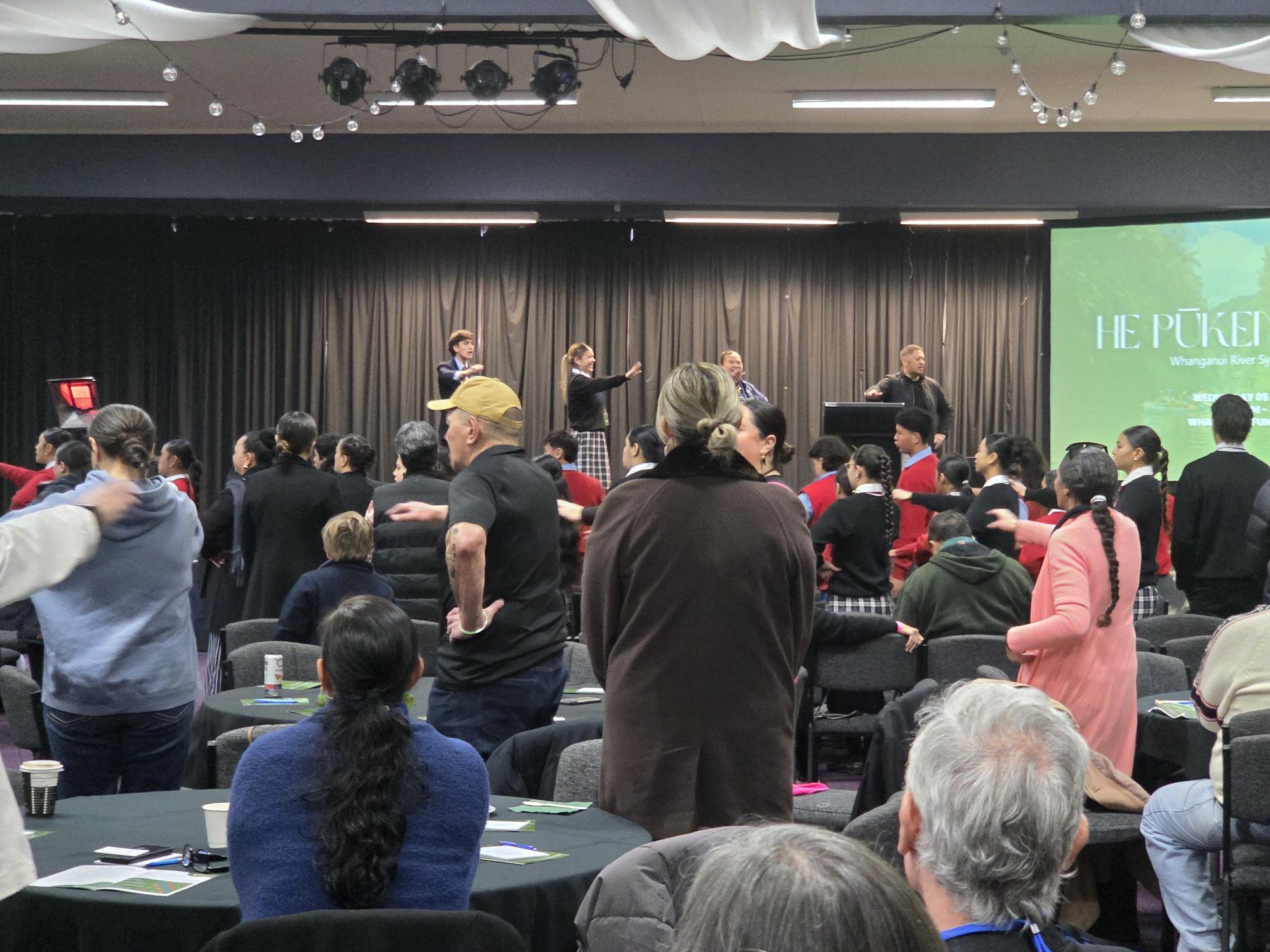
During the lunch break we were treated to the award-winning regional showcase piece titled "Ko Au Te Awa" performance by Rutherford Intermediate, Whanganui.

Further information can be found at https://www.ngatangatatiaki.co.nz/ or Ngā Tangata tiaki o Whanganui Face Book page https://www.facebook.com/ngatangatatiaki
Download the file
Visit the website
He Pūkenga Wai Symposium 2026
He Pūkenga Wai attendee's singing Te Wai o Whaganui

Two members of the Whakauae team recently attended the He Pūkenga Wai Symposium, held at the Whanganui Function Centre on 5 August. It was a day of shared knowledge, insights, and discussion, as uri came together to explore the many ways the people are working to improve and protect the health and wellbeing of Te Awa Tupua.

The day was led out by karakia from Hoani Ponga, rangatahi Charlie Peina and Te Matau Beckham with the help of Rongomaitawhiri Ah-Ching (Awa Fm and Ngā Tangata Tiaki Trustee).  A keynote presentation from Toiora Hawira followed, who described how the art of traditional navigation reclamation had contributed to his journey from kaiwhakatere trainee to Captain of the Ngahiraka Mai Tawhiti waka. He shared how navigators read the stars, ocean swells, follow migratory birds, and seasonal markers like Puanga to find direction and mark time.  

The next keynote speakers, David Hamilton and Liliana Pagliero from the Australian Rivers Institute shared slides about transforming river catchments. They talked about Building Catchment Resilience (BCR): A spatial modelling and economic framework that helps managers evaluate restoration investments, such as wetland creation, gully repair, and riparian planting, to lower sediment and nutrient loads. It has been utilised internationally, including framework applications with Whanganui Iwi on the Whanganui River. They were joined on stage by Javell Pereka, Jake Robinson, and Aimee Kopeke, who have been working alongside them on this planning tool.

During the day, participants had the opportunity to attend four workshops:

  • Te Pā Auroa – presented by Bubby Tamakehu, Jay Rerekura, Hoani Ponga and Mathew McIntyre-Wilson who reflected on the successes and challenges around recreating the traditional Te Pā Auroa (Eel Weirs). One of the challenges was trying to recreate a weir from watching video archives. The videos showed the engineering skills and expertise our tūpuna used when building these huge structures in formidable water conditions.
  • Mouri Tūroa –   presented by Project Manager Gordon Cribb, Creedence Lingman and Cameron Ryan they talked about the success of the four-year initiative designed to improve the health and wellbeing of the Whanganui River and to create nature-based employment opportunities for uri. The initiative included waterway protection through fencing, native planting, and maintenance; freshwater fish bio-diversity habitat restoration; animal and plant pest control to protect plantings and eco-sourced native tree nurseries. Cameron from Pīwaiwaka Farms talked about their Native Plant Nursery and their contribution to the project.
  • Kokohuia Wetlands – presented by Damien Kuru, Carlos Rippon, and Kimmy Ranginui, a biodiversity project aimed at restoring Kokohuia Wetlands. Their goal is to create a thriving habitat for the whenua by allowing the population of diverse species to adapt to environmental changes.
  • Marae Energy Resilience –Troy Brown was joined by Richard McKenzie (Te Whawhaki Trust Chairperson), Fleur Brown, Aroha Te Huia-Ngatuere, and Matiu Tarau (Tū Mai Rā, CEO) who through a round table discussion talked to the insights of having solar energy installed at their respective marae. They detailed the process they went through with whānau to achieve this, also describing the challenges they navigated in getting their projects past the post.
Bubby Tamakehu holding a hīnaki

During the lunch break we were treated to the award-winning regional showcase piece titled "Ko Au Te Awa" performance by Rutherford Intermediate, Whanganui.

Further information can be found at https://www.ngatangatatiaki.co.nz/ or Ngā Tangata tiaki o Whanganui Face Book page https://www.facebook.com/ngatangatatiaki

Download the file
Visit the website
Go Back