

Researcher Associate Professor Dr Sangeetha Chandrashekeran and Activist Scholar Brendan Kennedy from the University of Melbourne and the Australian Research Council Life Course Centre, recently spent time being hosted by Whakauae Research Services Ltd, exploring the rohe of Ngāti Hauiti. The trip, led by our Pou Tikanga, Utiku Potaka, reciprocated an earlier trip undertaken by Whakauae team members to Victoria, Australia in August 2024. Read the article here.
Our guests were welcomed with pōwhiri at Rātā Marae after which Utiku shared a short presentation on the work that the iwi were doing in the field of climate change. Sangeetha then updated us on the project she and Brendan were undertaking which is investigating the impact of access to water on the health and wellbeing of the Tati Tati people.
The purpose of this trip was threefold: to continue building the relationship between Whakauae, Ngāti Hauiti and the people of Tati Tati for whom Brendan is a traditional owner and senior knowledge holder; to further strengthen the connections between Whakauae and the University of Melbourne; and to explore the possibility of joint work between our two respective organisations. Representatives from the Rūnanga, including Utiku, Luke Enoka and Barb Thomason, along with taonga puoro tohunga Jerome Kavanagh, joined us throughout the visit to host our manuhiri and accompany them to sites of significance.
Following the Rangitīkei river from the northern reaches, east of Taihape township, down through Mangaweka and then to Rātā our guest were taken to places of importance to Ngāti Hauiti including the Papa-a-Tarinuku (Narrows), Lake Oporoa and Okahupokia Pā. Tribal leaders and knowledge holders’ Utiku and Aunty Barb regaled us all with the pūrākau that accompanied each site, invoking the stories of tūpuna and their deeds from days long past.
Sangeetha said of the first few days of the visit “…this trip has enabled us to deepen our understanding of Ngāti Hauiti whenua and awa, and we have to come to realise just how many struggles we share. Our visit has laid the foundations for a strong research collaboration into the future.”
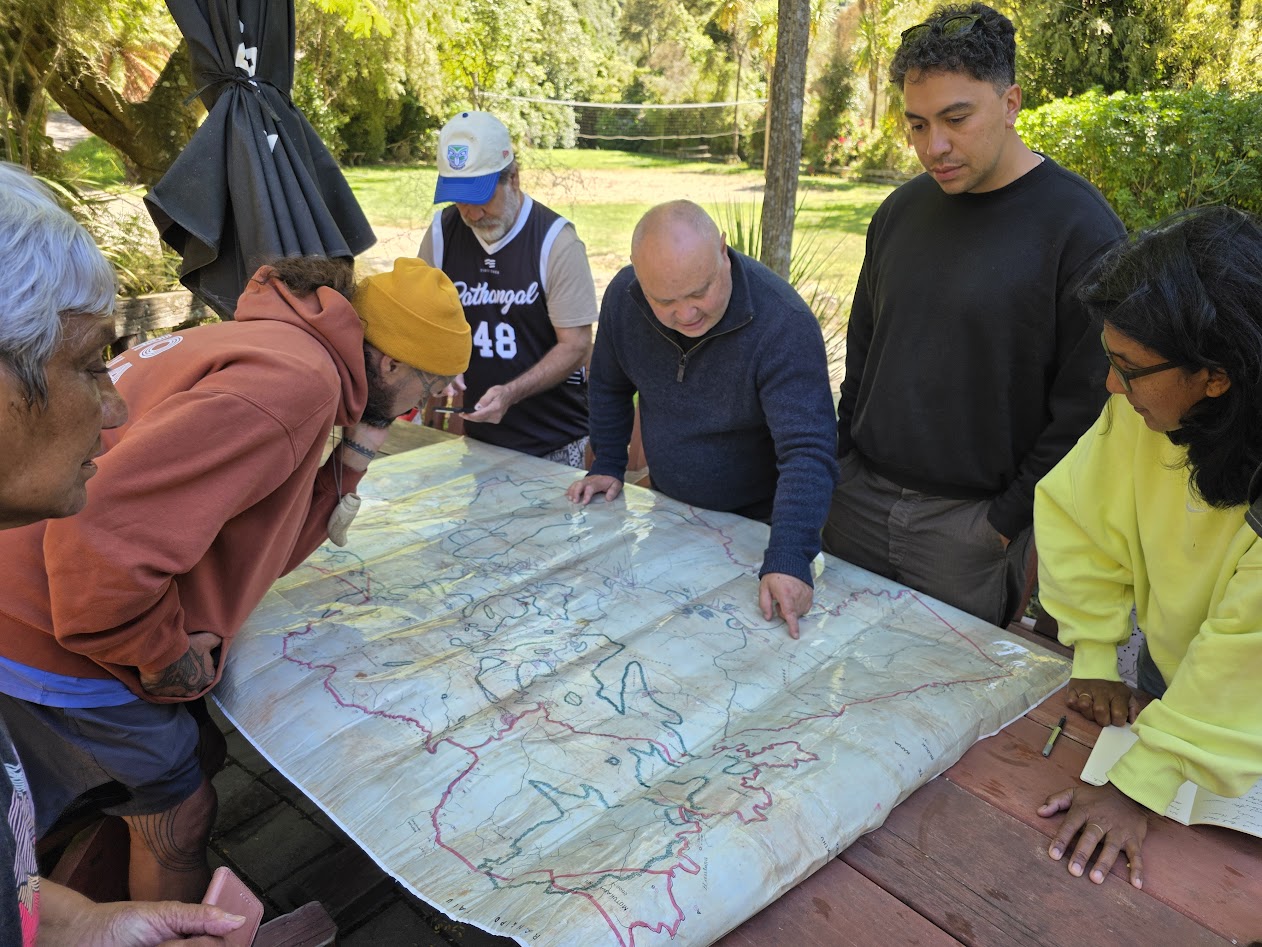
Researcher Associate Professor Dr Sangeetha Chandrashekeran and Activist Scholar Brendan Kennedy from the University of Melbourne and the Australian Research Council Life Course Centre, recently spent time being hosted by Whakauae Research Services Ltd, exploring the rohe of Ngāti Hauiti. The trip, led by our Pou Tikanga, Utiku Potaka, reciprocated an earlier trip undertaken by Whakauae team members to Victoria, Australia in August 2024. Read the article here.
Our guests were welcomed with pōwhiri at Rātā Marae after which Utiku shared a short presentation on the work that the iwi were doing in the field of climate change. Sangeetha then updated us on the project she and Brendan were undertaking which is investigating the impact of access to water on the health and wellbeing of the Tati Tati people.
The purpose of this trip was threefold: to continue building the relationship between Whakauae, Ngāti Hauiti and the people of Tati Tati for whom Brendan is a traditional owner and senior knowledge holder; to further strengthen the connections between Whakauae and the University of Melbourne; and to explore the possibility of joint work between our two respective organisations. Representatives from the Rūnanga, including Utiku, Luke Enoka and Barb Thomason, along with taonga puoro tohunga Jerome Kavanagh, joined us throughout the visit to host our manuhiri and accompany them to sites of significance.
Following the Rangitīkei river from the northern reaches, east of Taihape township, down through Mangaweka and then to Rātā our guest were taken to places of importance to Ngāti Hauiti including the Papa-a-Tarinuku (Narrows), Lake Oporoa and Okahupokia Pā. Tribal leaders and knowledge holders’ Utiku and Aunty Barb regaled us all with the pūrākau that accompanied each site, invoking the stories of tūpuna and their deeds from days long past.
Sangeetha said of the first few days of the visit “…this trip has enabled us to deepen our understanding of Ngāti Hauiti whenua and awa, and we have to come to realise just how many struggles we share. Our visit has laid the foundations for a strong research collaboration into the future.”


