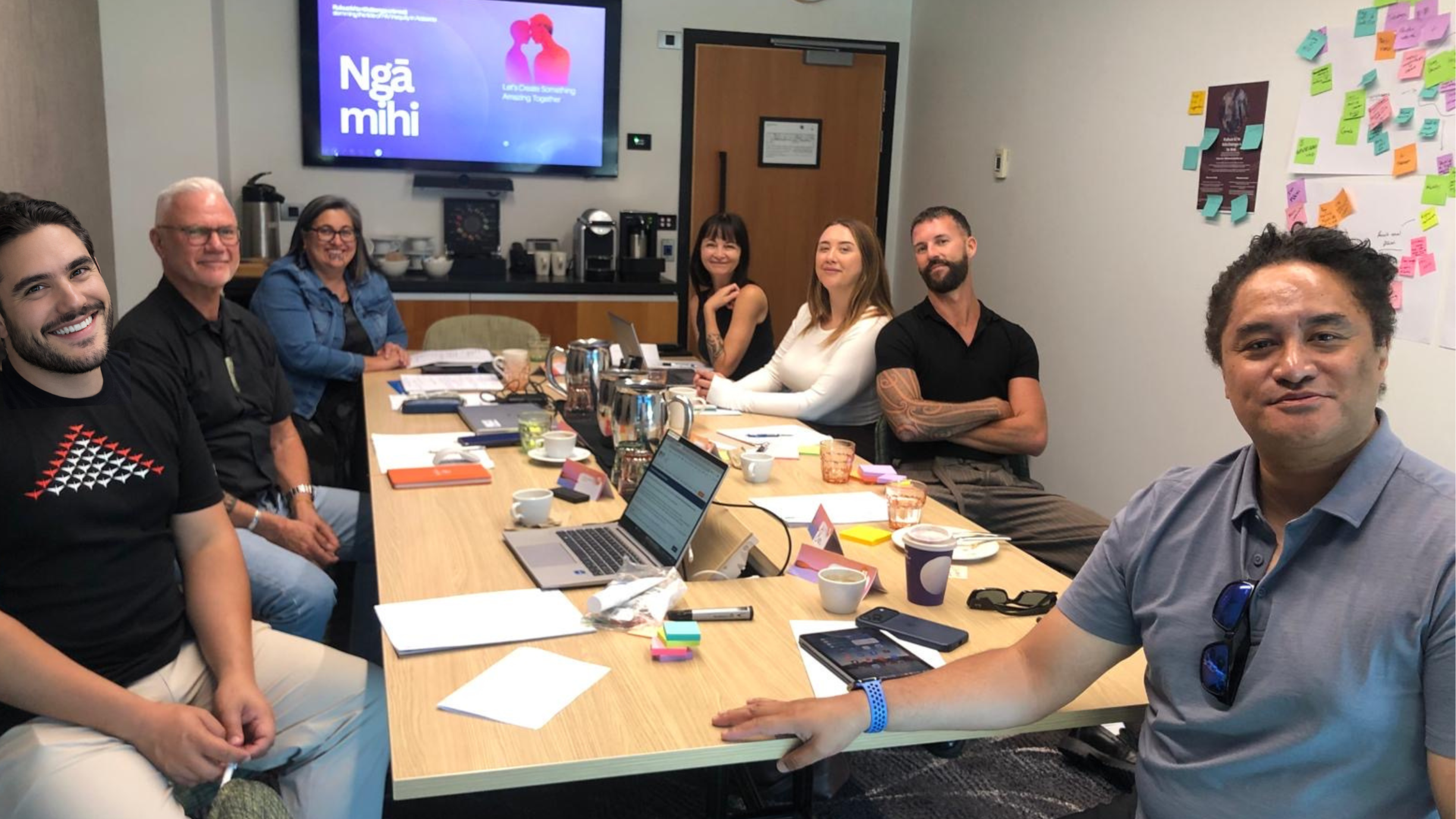
The research team behind Rukua ki te Rētōtanga o te Wai: Stemming the Tide of HIV Inequity in Aotearoa recently met in Tāmaki Makaurau with our advisory group to seek their guidance on the next stage of the project.
The advisory group hui brought together experts from across the HIV prevention and community health space, including people with lived experience, clinicians, and community advocates. The group represents a range of areas of mahi across Māori health providers, sexual health clinical practice, HIV community advocacy, and public health research, alongside those with lived experience of HIV. The group provided valuable feedback on the research approach, including how we engage with communities, how we communicate about HIV prevention, and how we recruit participants in ways that are respectful, inclusive, and culturally safe.
During our whakawhanaungatanga, Dr Clive Aspin offered a powerful and grounding reminder of the history that underpins HIV prevention work in Aotearoa. He invited the group to imagine what it was like to live through a pandemic that claimed the lives of half of your friends, bringing the conversation back to the devastating realities experienced by many communities during the early years of the HIV epidemic. His reflections reminded us that the work we are doing today exists because of the courage, activism, and care of those who came before us. As Clive noted, we must never forget that we are standing on the shoulders of giants, the advocates, activists, and community leaders who fought tirelessly for recognition, care, and prevention during some of the most difficult moments in the history of HIV.
The advisory group also shared insights about the barriers whānau may face when accessing HIV prevention services such as PrEP, including issues related to stigma, awareness, accessibility, and trust in health systems. Their reflections highlighted the importance of ensuring that HIV prevention approaches are not only clinically effective, but also culturally responsive and grounded in the lived realities of Māori communities. The discussion emphasised the need for research and services to better recognise the diversity of whānau Māori, including the different experiences, identities, and circumstances that shape how people engage with health care and prevention.
Their guidance is helping shape the next phase of the project, ensuring the research remains grounded in community knowledge and responsive to the priorities and aspirations of Māori. These insights will help inform how the project engages with communities, how recruitment is approached, and how the findings can ultimately contribute to strengthening HIV prevention and care for Māori.
We are deeply grateful to our advisory group for their whakaaro, generosity, and willingness to share their expertise and lived experience. Their ongoing support continues to strengthen this kaupapa and ensures the research remains accountable to the communities it seeks to serve.