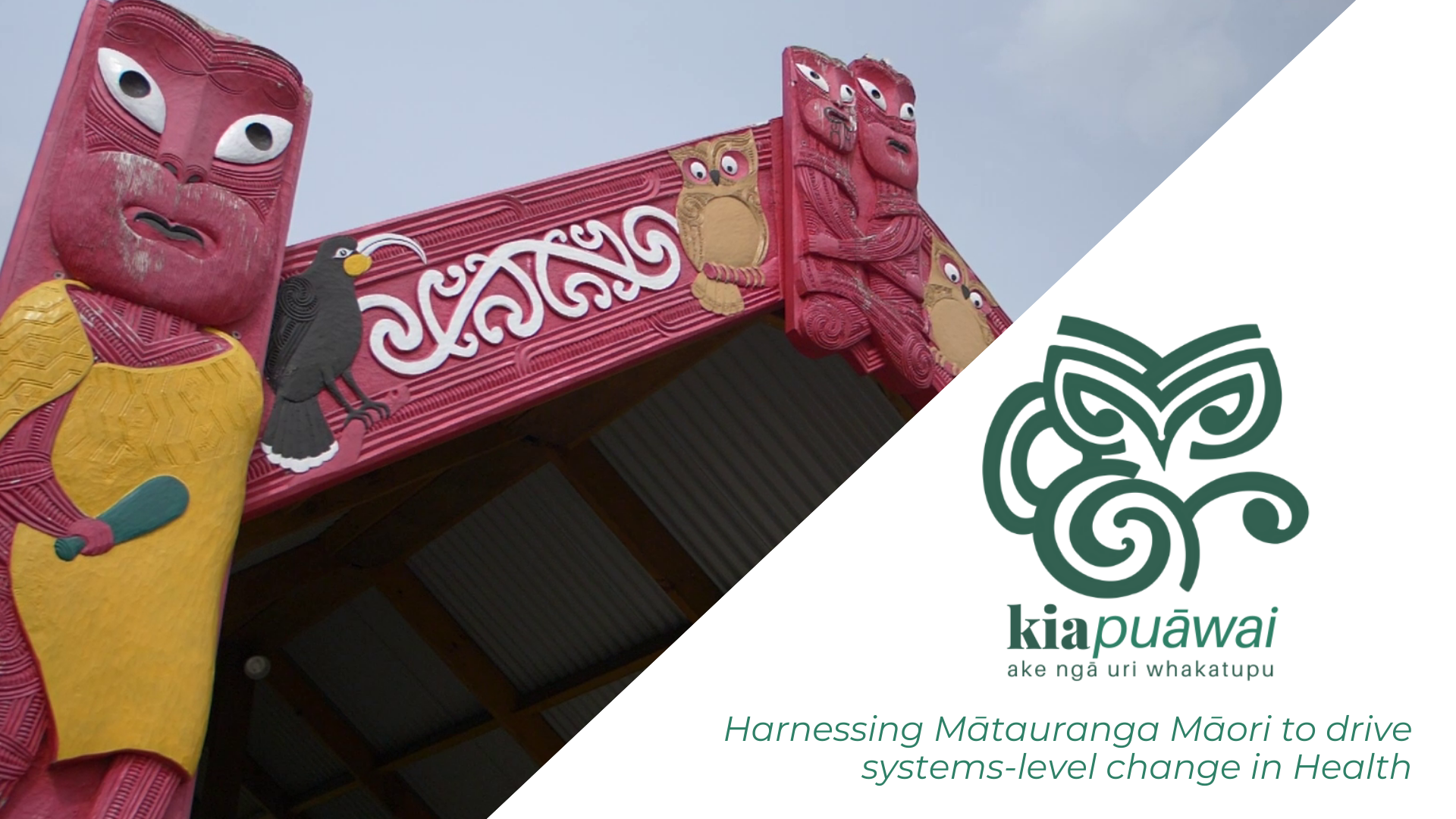
The five-year HRC funded research programme, Kia Puāwai ake ngā uri whakatupu – flourishing future generations has completed its fourth year, and is well postioned to move into its final year in 2026.
The research team, comprising 21 people across four focussed research projects, has the broad goal of generating new Māori knowledge to find solutions to improve the health and wellbeing of whānau Māori. Each of the projects is outlined below.
Rapua te ara Rangatira kia hikitia ai te oranga tangata: Leadership, governance and decision-making to achieve health equity, is a co-creation project with Ngāti Hauiti. The study is exploring leadership, governance and decision-making models that will support iwi Māori to make significant and enduring advances in achieving Māori health equity outcomes. A bespoke model of governance for Ngāti Hauiti has been developed through the research. Te Remu Huia embraces and builds on Ngāti Hauiti knowledge systems and supports the practical application of a governance model which will guide the Iwi into the future.
Tō mātou kāinga, tō mātou ūkaipō: Our home, our source of sustenance, has explored understandings of safe and healthy home environments that support whānau Māori to flourish. Engaging with whānau, iwi, community leaders, housing and design specialists, students and architects over several years, the project team has learnt that what makes a home truly special is being close to whenua. Home is a place where whānau Māori can care for te taiao; benefit from a sense of ‘belonging’; form and maintain supportive networks; enjoy intergenerational whānau living; and take advantage of opportunities to build on intangible values and experiences that help people feel safe and well.
He waka eke noa: Co-creating primary care that works for whānau Māori, has concentrated on investigating whānau and primary health care ideas on how to increase Māori access to primary health care in the pre-diagnosis phase of cancer. The focus of the study is to refine services at Gonville Health in Whanganui, drawing on the knowledge and experiences of whānau and of staff using a co-design process. A co-design working group has developed a three-point change model which is guiding shifts in the Gonville Health clinical setting, culture and service delivery approach supporting positive outcomes for whānau. You can read more here.
Translation, Uptake and Impact (TUI): Knowledge translation for impact pathways to facilitate key systems change, was designed to run alongside the three research projects described above to achieve the translation of new knowledge into impactful pathways for change. Each of the three research projects have, through TUI-facilitated kōrero, designed outcomes-centred dissemination methods and tools for impact. Facilitating the uptake of new research knowledge into policy making, management action and professional practice in health has been a key aim of the TUI component of the programme.
Throughout the past four years, each of the projects has been supported by advisory groups including a Tikanga Advisory, a TUI Advisory and project specific advisories. The additional expertise and rigour the advisory groups have contributed continues to encourage us to explore avenues to strengthen both research processes and impacts across the programme. We acknowledge, and hugely appreciate, the support of all advisory group members along with our extensive network of research partners across the programme.
A number of research events have been hosted, and creative design works developed, over the past four years of Kia Puāwai activity. These have included individual project hui and wānanga, Kāinga and Primary Care project symposia, a card game, pūrakau, workbooks and animated videos. Numerous conference presentations have also been delivered, journal articles published and master’s and PhD theses successfully completed. The dedicated Kia Puāwai website is a great place to visit and to explore the rich and varied creative expressions and knowledge exchange that the programme has so far produced.
As 2026, and the final year of the Kia Puāwai research programme, draws closer we will focus on embedding the changes the project teams have identified working closely with our partners, iwi, whānau and primary health care staff.