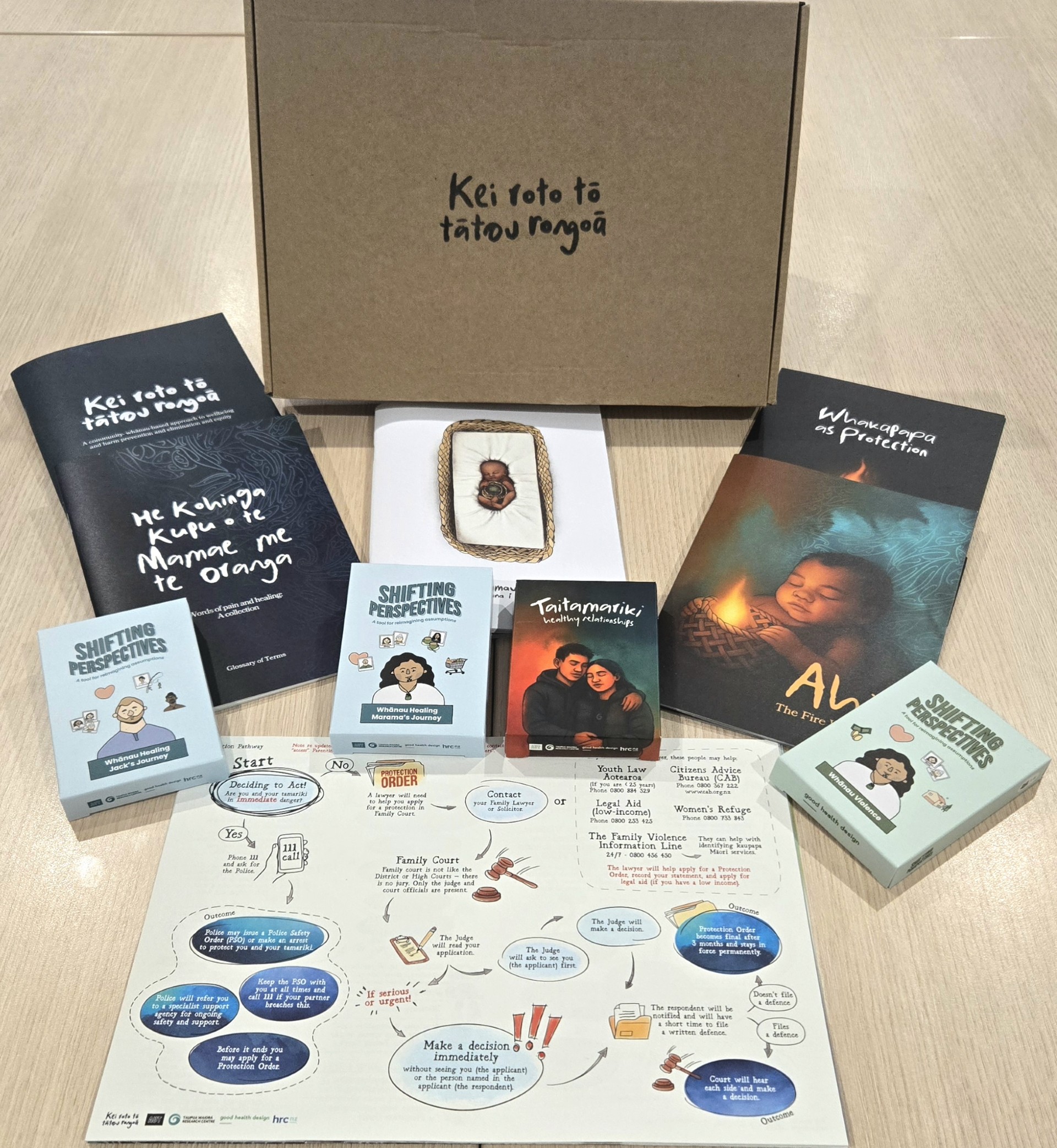
Kei Roto Tō Tātou Rongoā was a three-year research project funded by the Health Research Council of New Zealand, and led by Professor Denise Wilson from Taupua Waiora Research Centre at AUT, with support of Dr Tanya Allport from Whakauae Research and a range of other research and community knowledge holders.
The purpose of the research was to learn directly from whānau about what had supported them to reduce harm and foster healing. The project centred whānau knowledge and prioritised approaches grounded in te ao Māori.
Research approach
The study engaged:
Through wānanga, interviews, and shared storytelling, the project gathered critical insights into both the strengths within whānau and the systemic barriers they face. This participatory approach ensured that outcomes reflected authentic voices rather than external interpretations.
Key insights
Engagement with whānau and Māori wellbeing providers revealed that support often arrived too late, with systems typically intervening only once situations had escalated. Many described the child welfare system as complex, difficult to navigate, and at times punitive, rather than compassionate or aligned with values such as whanaungatanga and collective care.
Across the research, several key issues became clear: Whānau consistently highlighted the need for earlier, preventative support to avoid crisis situations. Limited access to essential services such as stable housing, mental health care, and financial assistance added significant pressure within whānau. There was also a strong call for more holistic, culturally grounded services that integrated trauma-informed practices with te ao Māori perspectives, including programmes for tāne Māori and Māori parenting. Whānau emphasised the importance of telling their own stories and shaping their own futures, while also ensuring that tamariki had a meaningful voice in decisions affecting their lives.
The project sought to contribute to long-term change by promoting earlier, culturally appropriate support to reduce the removal of tamariki Māori and improve outcomes for whānau. It highlighted the need for a simpler, more transparent, and compassionate system that empowers whānau and tamariki, strengthens access to essential services, and expands Māori-led programmes that support healing, identity, and relationships.
These findings informed a clear advocacy focus on systemic reform. The research called for policy changes that prioritise early, whānau-centred intervention and require culturally responsive, trauma-informed services. It also emphasised improving access to support through stronger partnerships with iwi and Māori providers, simplifying and humanising the child welfare system, and shifting away from punitive responses toward approaches grounded in support and empowerment. Central to this was increased investment in Māori-led solutions, including parenting programmes, tāne Māori initiatives, and culturally responsive counselling. The research also reinforced the importance of amplifying whānau and tamariki voices, ensuring they are active participants in decision-making and able to share their own narratives.
Outputs and resources
The project concluded at the end of 2025 with a national symposium that brought together whānau, service providers, educators, and policymakers to share insights and strengthen collective understanding. Key findings and insights were developed into practical resources designed to support both whānau and those working alongside them. These included tools to help navigate legal processes and interactions with child welfare systems, advocacy plans for service providers and government, resources supporting healthy relationships for taitamariki, and culturally grounded materials such as Ahi – The Fire Within, which drew on pūrākau to explore resilience and transformation. Additional resources, including Uplift Pathways and He Kohinga Kupu o te Mamae me te Oranga, supported understanding of system processes and provided language for discussing harm, healing, and wellbeing.
For more information and access to the resources go to: https://www.xn--tmata-oranga-7mb.co.nz/keirotototatourongoa/home